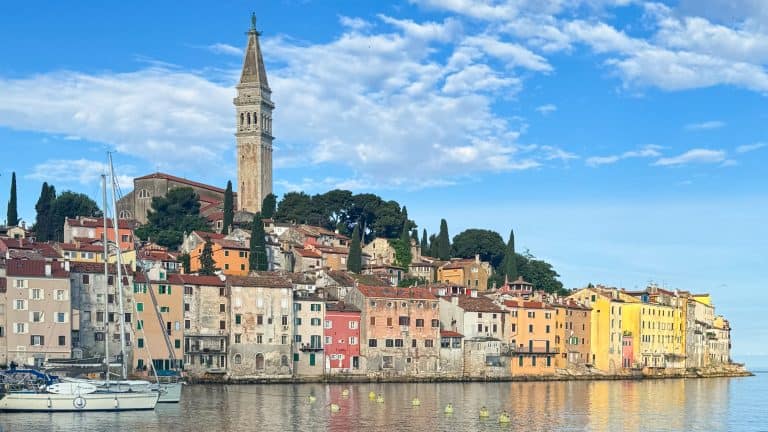
10-Day Croatia Itinerary: Zadar, Split, Hvar & Dubrovnik by Public Transport
Freedom Years Travel contains affiliate links. If you make a purchase using one of the links below, we may receive compensation at no extra cost to you. We only recommend products and services we use and trust. Read our disclaimer for more information.
Croatia’s Dalmatian coast has grown steadily in popularity over recent years — and it’s easy to see why. Think crystal-clear water, historic stone towns and islands scattered just offshore, with sunsets that are often among the most vivid you’ll see anywhere.
If you’re planning a trip along this part of the coast, this route links a handful of its most memorable stops in a straightforward way.
This 10-day Croatia itinerary follows a straightforward coastal route from Zadar to Dubrovnik, stopping in Split and the island of Hvar along the way. Travelling by a combination of buses and ferries, the journey moves gradually south without the need for a car.
Rather than rushing between destinations, the itinerary allows time to settle into each place properly. Zadar offers a relaxed introduction to Dalmatia, Split centres around the remarkable setting of Diocletian’s Palace, Hvar brings a change of pace on the islands, and Dubrovnik provides a dramatic finale along the Adriatic.
This route closely mirrors the journey we followed along Croatia’s Dalmatian coast, which I break down in detail in my Croatia travel costs guide, including realistic budgets for accommodation, transport, food and sightseeing.
If you prefer to explore Croatia by car, I’ve also outlined a 10-day Croatia road trip itinerary that includes Plitvice Lakes National Park, while my 14-day Croatia road trip itinerary extends the route further north into Istria before continuing south to Dubrovnik.
This itinerary works particularly well if you prefer not to rent a car and want a relaxed, point-to-point route between Croatia’s main Dalmatian destinations. In this guide you’ll find travel times between each stop, ferry routes and practical tips for visiting Zadar, Split, Hvar and Dubrovnik.
At a Glance: 10 Days in Croatia
In this guide you’ll find a detailed 10-day Croatia itinerary, including travel times between destinations, ferry routes, and practical tips for visiting Zadar, Split, Hvar and Dubrovnik.
Start: Zadar
Finish: Dubrovnik
Transport: Bus and ferry connections along the Dalmatian coast
Travel Style: Coastal itinerary with 2–3 nights per base
| Location | Nights | Notes |
|---|---|---|
| Zadar | 2 | Old Town, sea views and sunset walks |
| Split | 3 | Roman history in Split and an optional Trogir day trip |
| Hvar | 3 | Harbour atmosphere and island views in Hvar Town |
| Dubrovnik | 2 | City walls, historic lanes and Adriatic views |
Why This Route Works
- It follows a simple north–south coastal route. Travelling from Zadar to Dubrovnik keeps the journey logical and avoids doubling back along the Dalmatian coast.
- Transport connections are straightforward. Regular buses link Zadar and Split, while fast ferries connect Split with Hvar and continue south to Dubrovnik.
- Travel days remain manageable. Most transfers take between two and three hours, making it possible to move between destinations without losing an entire day.
- You experience both mainland cities and island scenery. Zadar and Split provide historic coastal towns, while Hvar introduces a slower island atmosphere before finishing in Dubrovnik.
- Each stop works well as a base. Two or three nights in each location allows time to explore properly without constantly packing and moving on.
- The route mirrors Croatia’s most scenic coastline. Much of the journey follows the Dalmatian coast, where historic towns, island views and clear Adriatic water define the landscape.
🚢 Planning a Croatia Trip Without a Car?
⛴ Ferries: Ferryhopper – A simple way to check schedules and book ferry tickets between Split, Hvar and Dubrovnik. It brings together the main operators, making it easy to compare routes and departure times.
🚌 Bus Travel: FlixBus and Arriva Croatia – Reliable coach services connect Zadar, Split and other coastal cities with frequent daily departures.
🏨 Accommodation: Booking.com – The widest range of hotels and apartments across Croatia, with flexible cancellation on many properties.
🎧 Tours & Activities: GetYourGuide – Useful for walking tours in Split and Dubrovnik, boat trips from Hvar and selected day trips.
10-Day Croatia Itinerary by Public Transport: Day-by-Day Route
I’ve mapped the full route below, including key stops and transport hubs to make planning a little easier.
Day 1-2 – Zadar
Historic coastal town known for its Sea Organ, Roman ruins and Adriatic sunsets.
Arrival: Zadar
Overnight: Zadar (2 nights)
Zadar makes an excellent starting point for exploring Croatia’s Dalmatian coast. Smaller and more relaxed than Split or Dubrovnik, it’s an easy place to settle in while still offering plenty to see.
Most visitors spend their time wandering through Zadar Old Town, a compact peninsula surrounded by historic walls and views of the Adriatic. Two nights here allows time to explore the historic centre without feeling rushed.
You might spend your time:
- Walking through the narrow lanes of Zadar Old Town
- Visiting the Roman Forum and St Donatus Church
- Listening to the unusual sounds of the Sea Organ Zadar
- Watching sunset from the nearby Sun Salutation installation
Sunset is one of the highlights of the city. As evening approaches, people gather along the waterfront promenade where the Sea Organ Zadar produces soft tones created by waves moving through pipes beneath the steps. Nearby, the Sun Salutation installation begins to glow after dark, creating a colourful display powered by solar energy collected during the day.
Practical Notes
Zadar’s Old Town is largely pedestrianised, so most accommodation is within easy walking distance of the main sights.
If arriving by bus, the Zadar bus station sits around 20 minutes’ walk or a short taxi ride from the Old Town.
Where to Stay in Zadar
For this itinerary, staying within or close to the Old Town peninsula makes exploring much easier. Most restaurants, historic sights and sunset viewpoints are within a short walk.
👉 Browse accommodation in Zadar here.
After two nights in Zadar, the journey continues south along the Dalmatian coast to Split, one of Croatia’s most historically fascinating cities.

Days 3-5 – Split
Historic harbour city built around Diocletian’s Palace and the main gateway to Croatia’s Dalmatian islands.
Travel: Zadar to Split
Overnight: Split (3 nights)
Travel: Zadar to Split
Bus journey: Around 2.5–3 hours
Regular buses run between Zadar and Split throughout the day. The route follows much of the Dalmatian coastline and arrives beside Split’s Old Town, within a short walk of the ferry terminal and Diocletian’s Palace.
Split is Croatia’s second-largest city and the main transport hub for reaching many of the Dalmatian islands. Ferries depart regularly from the harbour just beside the Old Town, making it an easy base before continuing on to places like Hvar.
At the centre of the city lies Diocletian’s Palace, originally built in the 4th century as a retirement residence for the Roman emperor. Today the palace isn’t a museum but a living neighbourhood, with homes, cafés and small shops tucked into the ancient stone streets.
Arriving from Zadar, much of your first day will likely be spent travelling and settling into accommodation. Fortunately, Split’s historic centre is compact and easy to explore, so it’s simple to begin wandering almost immediately after arrival.
Three nights provides time to experience the palace complex properly and to explore a little beyond the historic core.
You might spend your time:
• Wandering through the narrow lanes inside Diocletian’s Palace
• Climbing the Cathedral bell tower for views over the rooftops
• Visiting the lively Split Green Market
• Walking up Marjan Hill for coastal views over the city
Split can be busy during the day, particularly when cruise passengers arrive, but the atmosphere changes in the evening as the day visitors depart. Early mornings and late afternoons tend to be the most enjoyable times to explore the palace streets.


Optional Day Trip: Trogir
Trogir makes an easy and worthwhile half-day trip from Split. Located just 30–40 minutes away, its compact Old Town sits on a small island connected by bridges, making it simple to explore on foot.
The town is known for its well-preserved medieval streets, Romanesque and Renaissance buildings, and a pleasant waterfront lined with cafés and restaurants. It’s smaller and quieter than Split, which makes it a nice contrast if you’re looking for a slower pace for part of the day.
You don’t need long here — one to two hours is enough to walk through the Old Town, visit the cathedral and pause for a coffee or lunch along the harbour.
Getting there is straightforward:
- Local buses run regularly from Split bus station
- Boat transfers operate in season and can be a more scenic option
- Taxis or ride-share are also easy and relatively inexpensive
If you prefer not to organise transport yourself, small-group tours are available and typically combine Trogir with nearby coastal stops.
Practical Notes
Split’s historic centre sits largely within a pedestrian-only zone. If staying inside Diocletian’s Palace, expect narrow lanes, stone staircases and short walks with luggage from the nearest vehicle access point.
The Split ferry terminal and main bus station sit directly beside the Old Town, making transfers straightforward for travellers arriving by bus or continuing onward by ferry.
Where to Stay in Split
For this itinerary, staying within or just outside Diocletian’s Palace makes exploring the historic centre easiest.
If you have the opportunity, I’d recommend staying inside the palace walls. How often can you spend the night inside what is effectively a living Roman palace?
👉 Browse highly rated Split accommodation here.

Day 6-8 – Hvar
Island town known for its harbour views, fortress and nearby Pakleni Islands.
Overnight: Hvar Town (3 nights)
Travel: Split to Hvar
Fast ferry: Around 1 hour
Passenger catamarans connect Split and Hvar Town several times daily, particularly during the summer season. Ferries depart from the harbour beside Split’s Old Town and arrive directly in the centre of Hvar Town.
Hvar is one of Croatia’s most popular islands, known for its historic harbour, clear water and easy access to the surrounding islands. Ferries arrive directly beside the main square, and the harbour forms the centre of activity, with cafés, restaurants and boats coming and going throughout the day.
For this itinerary, it’s worth staying in the heart of Hvar Town, within easy walking distance of the harbour and main square. Before visiting, I had hesitated slightly because of the island’s reputation for nightlife. In reality, we were completely oblivious to it — we didn’t lose a single wink of sleep. Being centrally located meant everything was easy to reach on foot, and nights were surprisingly quiet.
What stood out most was how lively the town felt during the day. During our stay the waterfront hosted a small televised half-court basketball tournament, while another day brought a long-distance swimming event in the harbour. Ferries, sailing boats and superyachts moved constantly in and out of port, giving the town an energy that made it enjoyable simply to sit and watch harbour life unfold.
You might spend your time:
- Wandering around Hvar Town’s harbour and main square
- Walking up to the Spanish Fortress for views over the town and Pakleni Islands
- Taking a kayak or boat trip to the Pakleni Islands
- Exploring smaller villages such as Stari Grad, Vrboska or Jelsa
Exploring the Island by Quad Bike
For us, the highlight of our stay was hiring a quad bike and exploring the island for the day. It gave us a chance to see a different side of Hvar, away from the harbour, where the landscape shifts between vineyards, pine forests and small stone villages. Roads cross the island, often opening onto wide views over the Adriatic.
Hiring was straightforward in Hvar Town, with several operators near the harbour offering half- and full-day rentals.
Practical Notes
Passenger ferries arrive directly in Hvar Town harbour, within walking distance of most accommodation.
The town itself is compact but built on steep hillsides, so expect stone steps and uphill streets when moving around.
Hvar can also be noticeably more expensive than mainland cities, particularly for restaurants and (to my disappointment) gelato.
Where to Stay in Hvar
For this itinerary, staying close to Hvar Town harbour makes the most sense. Ferries arrive here, and the waterfront is where you’ll find most restaurants, boat trips and departure points for excursions.
Many small guesthouses and apartments also offer sea-facing terraces, making them a particularly pleasant place to watch the boats moving in and out of the harbour.
👉 Browse accommodation near Hvar Town here.
After three nights on the island, the journey continues south along the Dalmatian coast to Dubrovnik, one of the most dramatic historic cities in the Adriatic.

Day 9-10 – Dubrovnik
Medieval walled city dramatically set above the Adriatic.
Overnight: Dubrovnik (2 nights)
Travel: Hvar to Dubrovnik
Fast ferry: Around 3–3.5 hours
Passenger catamarans run between Hvar Town and Dubrovnik, usually once or twice daily depending on the season. It’s one of the longer transfers on this itinerary, so it’s worth checking departure times in advance and booking ahead during the summer months.
Arriving in Dubrovnik feels like stepping onto a film set. The city’s medieval walls rise above the Adriatic, enclosing a maze of limestone streets and terracotta rooftops.
Dubrovnik is easily Croatia’s most famous destination, and while it can be busy during the day, the atmosphere shifts noticeably in the early morning and evening, when the Old Town feels calmer and easier to explore.
Two nights is enough time to experience the highlights, particularly if you start exploring early in the day. However, if your schedule allows, an extra night here would certainly be worthwhile.
You might spend your time:
- Walking the Dubrovnik City Walls for views across the Old Town and Adriatic
- Exploring the narrow stone streets inside the Old Town
- Visiting Fort Lovrijenac, perched dramatically outside the city walls
- Taking the cable car or hiking up Mt Srđ for panoramic views
- Joining a Game of Thrones walking tour to see filming locations and gain a different perspective on the city
Early morning is one of the best times to be out. The streets are quieter, and it’s easier to move around before the crowds arrive.
Practical Notes
Dubrovnik’s Old Town is fully pedestrianised, so most visitors arrive on foot from nearby drop-off points or bus stops. Wheeled suitcases are still allowed, but the cobbled streets and steps mean you’ll often need to carry your bag for at least part of the way.
If staying outside the Old Town, local buses run regularly between the historic centre and neighbourhoods such as Lapad or Babin Kuk.
Tickets for the city walls are relatively expensive but widely considered one of the most worthwhile experiences in the city.
Where to Stay in Dubrovnik
There are three main areas travellers tend to choose:
Inside the Old Town – Maximum atmosphere and the most memorable setting, particularly in the early morning and evening once day visitors leave.
Near the Old Town – A practical compromise, allowing easy walking access while avoiding the need to carry luggage through the historic gates.
Lapad – A quieter neighbourhood with a seaside promenade and regular bus connections to the Old Town.
👉 Browse accommodation options in Dubrovnik here.


Optional Day Trips from Dubrovnik
If you can extend your time in Dubrovnik and would like to add one organised outing, these are highly rated options:
🥾 Lokrum Island Scenic Hike: History, Nature & Stories
⛵ Elaphiti Islands: Luxury Pirate Ship Cruise
🇲🇪 Montenegro Day Trip: Perast, Kotor & Budva Small-Group Day Trip
.
10-Day Route Summary
🗺 10-Day Croatia Itinerary Overview
Start: Zadar
Finish: Dubrovnik
Transport: Bus and ferry connections
2 nights Zadar
3 nights Split (optional Trogir visit)
3 nights Hvar
2 nights Dubrovnik
Planning Considerations for This 10-Day Croatia Itinerary
Best Time to visit Croatia
Late May, June and September generally offer the best balance of warm weather and manageable visitor numbers. Ferry schedules are fully operational, and conditions are comfortable for both sightseeing and travel days.
July and August bring hotter temperatures, busier ferry routes and higher accommodation prices — particularly in Split, Hvar and Dubrovnik. If travelling in peak summer, it’s worth booking ferries and accommodation well in advance.
Travelling Croatia by Bus and Ferry
Public transport along the Dalmatian coast is reliable and relatively easy to use. Buses connect the main coastal cities, while ferries and catamarans link the islands with the mainland.
Most journeys are straightforward, but a little planning helps:
- Bus routes between Zadar and Split run frequently and are easy to book online. Journey times are a useful guide, but in practice services can run a little later than scheduled, particularly in summer traffic.
- Ferries between Split, Hvar and Dubrovnik may have limited daily departures.
- In peak season, popular routes can sell out — particularly morning sailings.
- Ports and bus stations are usually centrally located, but allow time for transfers.
Overall, travelling this route without a car is entirely manageable, particularly if you prefer not to navigate parking or drive in unfamiliar areas.
Booking Ferries and Tickets
Ferry schedules vary by season, with more frequent services operating between June and September. It’s worth checking departure times in advance, particularly for routes such as Hvar to Dubrovnik, as timetables are often released only a few months ahead.
When planning your journey:
- Check schedules in advance, particularly for Hvar to Dubrovnik
- Book earlier departures where possible to maximise your day
- Allow time for boarding, especially in busy ports like Split
- Confirm whether your ferry arrives in Hvar Town or Stari Grad
Catamarans (passenger ferries) are generally the fastest and most convenient option for this itinerary.
Packing and Luggage Considerations
Travelling by bus and ferry is easier with manageable luggage. You’ll often be walking short distances between stations, ports and accommodation, sometimes over cobbled streets.
If possible:
- Pack lightly and use a smaller suitcase or backpack
- Be prepared to carry luggage for short distances in pedestrian areas
This becomes particularly relevant in places like Hvar Town and Dubrovnik’s Old Town, where vehicle access is limited.

Final Thoughts
Ten days is enough to experience some of the Dalmatian coast’s most memorable destinations without feeling rushed, particularly if you move gradually south and allow two or three nights in each place.
While this version focuses on travelling without a car, the route is very similar to my 10-day Croatia road trip itinerary, which includes Plitvice Lakes and a shorter island stay. If you have more time, the 14-day Croatia road trip itinerary allows for a slower pace and includes Istria as well.
Frequently Asked Questions: 10-Day Croatia Itinerary
Yes, 10 days is enough to experience Croatia’s Dalmatian coast at a comfortable pace. This itinerary allows time in Zadar, Split, Hvar and Dubrovnik without rushing between destinations. If you have additional time, extending your stay in Dubrovnik or adding another island can make the trip feel more relaxed.
Yes, this route works very well without a car. Buses connect the main coastal cities, and ferries link the islands with the mainland. Travelling by public transport is often simpler than driving, particularly in historic centres where parking is limited.
The easiest way to travel from Split to Hvar is by ferry or catamaran. Passenger services run frequently during the main travel season, with journey times of around one hour. Schedules vary by season, so it’s worth checking departure times in advance and booking early in peak months.
There are direct catamaran services between Hvar and Dubrovnik, typically taking around three to four hours. These usually run once or twice daily in season, but schedules are released only a few months in advance, so it’s worth checking closer to your travel dates and booking early where possible.
The best way depends on your travel style. Public transport works well along the Dalmatian coast, with reliable buses and ferry connections between major destinations. Renting a car offers more flexibility for inland areas such as Plitvice Lakes, but is not essential for this coastal route.
Yes, two days is enough to see Dubrovnik’s main highlights, including the city walls, Old Town and viewpoints from Mt Srđ. Travellers who prefer a slower pace or want to include day trips may prefer three nights if time allows.
Late May, June and September generally offer the best balance of warm weather and manageable crowds. July and August bring higher temperatures, busier ferry routes and increased accommodation prices, particularly in popular destinations such as Hvar and Dubrovnik.
Hvar is one of the easiest islands to include on a 10-day Croatia itinerary due to its regular ferry connections with Split and Dubrovnik. It offers a mix of historic town atmosphere, boat trips and island scenery. Alternatives such as Brač or Korčula can also work, but may require more complex routing.