14 Day Croatia Road Trip Itinerary from Zagreb to Dubrovnik
Freedom Years Travel contains affiliate links. If you make a purchase using one of the links below, we may receive compensation at no extra cost to you. We only recommend products and services we use and trust. Read our disclaimer for more information.
Croatia is a strikingly beautiful country — intensely blue water, clear skies, and sunsets so deeply coloured they almost look as though nature has turned up the saturation filter for the evening. Beyond the well-known cities of Split and Dubrovnik, there are smaller coastal towns and inland villages that are just as compelling, if you allow time to notice them.
This 14-day Croatia road trip is designed for travellers who don’t want to rush from one headline destination to the next. Starting in Zagreb and finishing in Dubrovnik, it follows a straightforward north-to-south route with a one-way car hire, avoiding backtracking and unnecessary long driving days. Most stops are two or three nights, giving you time to settle in, explore properly, and recover after full days on your feet.
This itinerary is based on our own road trips through Croatia, including lessons learned from moving too quickly the first time. You’ll experience the elegance of Zagreb, the atmosphere of Rovinj and Istria’s hill towns, the extraordinary colours of Plitvice Lakes, the Roman remains of Split, and the dramatic setting of Dubrovnik. There’s structure here, but also flexibility — with optional stops and day trips built in.
If you have less time, our 10-day Croatia itinerary covers many of these highlights at a quicker pace. This version simply allows you to move more comfortably and see a little more along the way.
At a Glance: 14 Days in Croatia
Start: Zagreb
Finish: Dubrovnik
Transport: One-way car hire (collect in Zagreb, drop in Dubrovnik)
Travel Style: Self-drive road trip with 2–3 nights per base
| Location | Nights | Notes |
|---|---|---|
| Zagreb | 2 | Capital city introduction |
| Rovinj | 3 | Coastal base with optional Motovun day trip |
| Plitvice Lakes | 2 | National park visit (via Rastoke stop) |
| Split | 2 | Roman history; Trogir lunch stop en route |
| Dubrovnik | 3 | City walls, Mt Srđ, coastal finale |
Why This Route Works
- It follows a logical north-to-south flow. Starting in Zagreb and finishing in Dubrovnik avoids doubling back and makes one-way car hire straightforward.
- There are no excessive driving days. Most travel days are around three hours, often broken up with worthwhile stops such as Rastoke or Trogir.
- It shows different sides of Croatia. From Zagreb’s Central European feel to Istria’s Italian influences, from inland national parks to the Dalmatian coast, the contrasts are clear without feeling disjointed.
- Plitvice sits in the right place. Visiting between Istria and Split keeps the route efficient and avoids driving long distances after a full day in the park.
- Each base is two or three nights. Fewer hotel changes, more time to explore properly.
- Optional stops fit naturally. Motovun, Rastoke and Trogir enhance the journey without requiring major detours.
Planning a self-drive trip across multiple regions does take a little organisation. These are the booking platforms we rely on when mapping out routes like this:
🔧 Planning a Croatia Road Trip?
These are the tools I personally use when organising self-drive trips across Croatia and Slovenia.
🚗 Car Rental: Discover Cars – Helpful for comparing prices across major and local agencies. Particularly useful for one-way rentals between Zagreb and Dubrovnik.
📶 eSIM: Airalo – Simple setup with reliable coverage across coastal towns, national parks and rural areas. Useful for navigation, parking locations and ferry schedules.
🏨 Accommodation: Booking.com – The widest range of hotels and apartments across Croatia, with flexible cancellation on many properties.
🎧 Tours & Activities: Get Your Guide – Useful for walking tours in Split and Dubrovnik, small-group inland Istria tours, and selected day trips.
🗺 Navigation: Google Maps + Waze – Google Maps works well across Croatia, while Waze can help with real-time traffic updates near Dubrovnik and during peak summer travel.
14-Day Croatia Road Trip Itinerary: Day-by-Day Route
Day 1-2 – Zagreb
Overnight: Zagreb
Zagreb is a practical starting point for this route, with strong flight connections and straightforward onward travel by road. From here, it’s an easy drive of around three hours to Istria, making it a manageable place to begin.
The capital feels more Central European than Mediterranean, with broad squares, Austro-Hungarian architecture and a well-established café culture. It’s compact and easy to explore on foot, and two nights is enough to get a sense of the city without feeling rushed.
You might spend your time:
- Wandering between Upper and Lower Town
- Visiting Dolac Market in the morning
- Exploring one or two small museums
- Settling into the rhythm of local cafés
Zagreb doesn’t require a tightly planned schedule. Its appeal lies more in atmosphere than in ticking off major sights.
Practical Notes
- Collect your hire car on departure day rather than keeping it overnight in the city.
- Stay within walking distance of the centre to avoid needing public transport.
Where to Stay in Zagreb
For this itinerary, aim to stay within walking distance of the Upper or Lower Town so you can explore on foot and collect your hire car easily on departure day. Accommodation near the main square (Ban Jelačić Square) provides good access to both parts of the city.
👉 Browse accommodation in Zagreb here.

Days 3-5 – Rovinj (Istria)
Driving : Zagreb to Rovinj
Motorway route: Approx. 250 km | 3 hours
The fastest option follows the A6 and A8 motorways for most of the journey. Roads are well maintained and clearly signposted.
Avoiding motorways: Approx. 240 km | 4–4.5 hours
Secondary roads take longer but pass through smaller towns and rural stretches before you reach the Istrian peninsula. Allow extra time and expect slower speeds.
If you’re arriving in Croatia after a long-haul flight, the motorway may be the easier choice. If you’re travelling at a relaxed pace and prefer to see more of the countryside, the slower route works well — just allow the extra time.
Rovinj makes an ideal three-night base. It’s compact, atmospheric and easy to navigate on foot once you’ve parked, with just enough to do nearby if you’d like to explore further inland.
Arrival & Parking
If you’re staying within the Old Town, expect narrow lanes and limited vehicle access. Most visitors park outside the historic centre and walk in, sometimes with assistance from hosts if arranged in advance. Our host met us in a golf buggy. (My very favourite means of transport)
It’s worth packing a smaller overnight-style bag if your accommodation is within the pedestrian zone — steep steps and cobbled streets are common.
Experiencing Rovinj
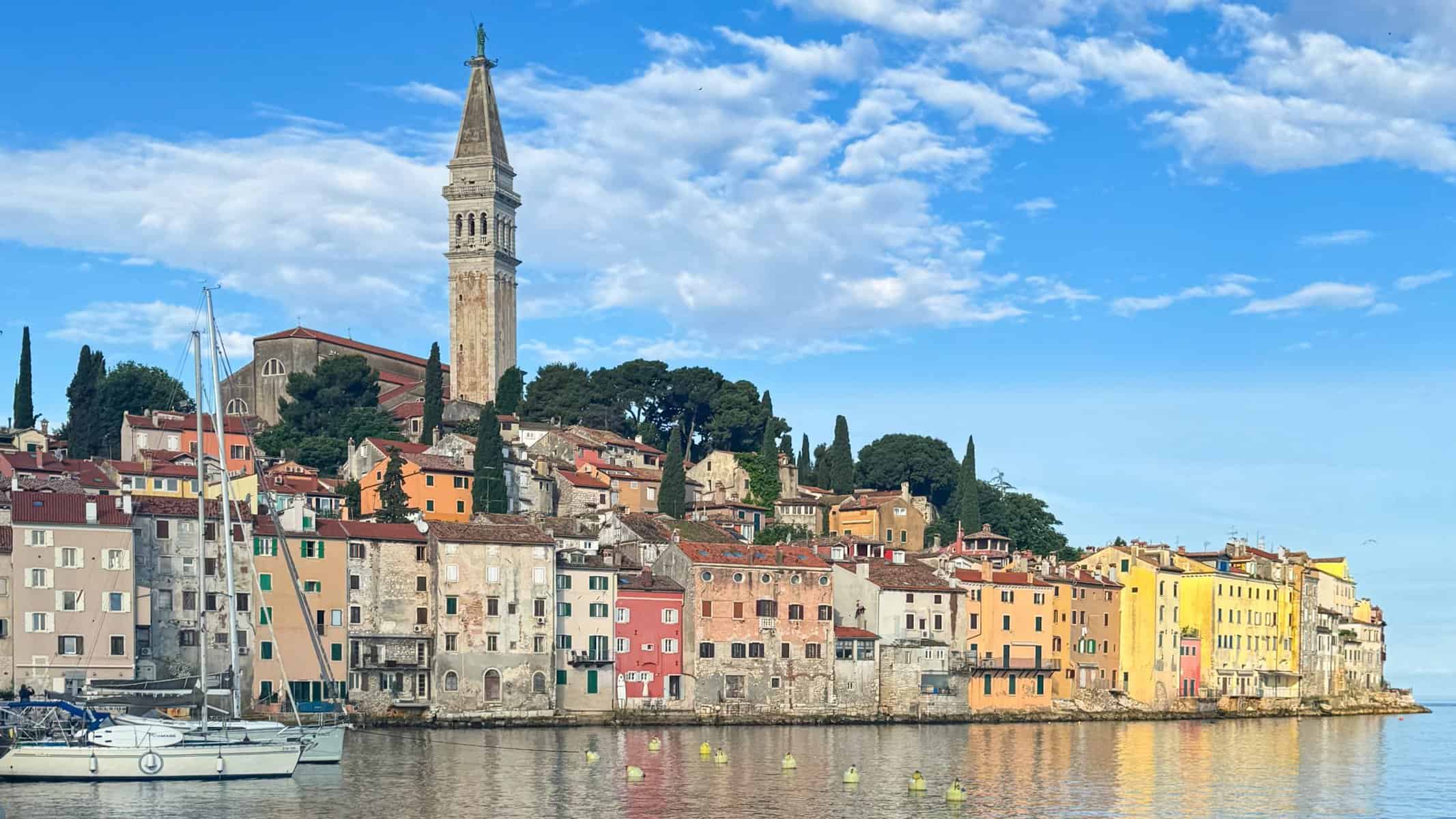
Rovinj is best early in the morning and again in the evening.
In the morning, the lanes are quiet, laundry hangs between the pastel buildings and fishing boats return to harbour. By evening, the waterfront fills with diners and the light softens over the Adriatic.
There isn’t a long list of headline attractions here. Instead, your time tends to look something like this:
- Walking up to St Euphemia’s Church for the views
- Having coffee by the harbour before the day-trippers arrive
- Choosing a restaurant on the water and taking your time
- Sitting on the rocks at the water’s edge with a drink at sunset
Three nights means you’re not trying to fit everything into a single afternoon. You can go out early one morning, skip it the next, return to a restaurant you liked, and let the town feel familiar rather than fleeting.


Optional Morning Trip: Motovun
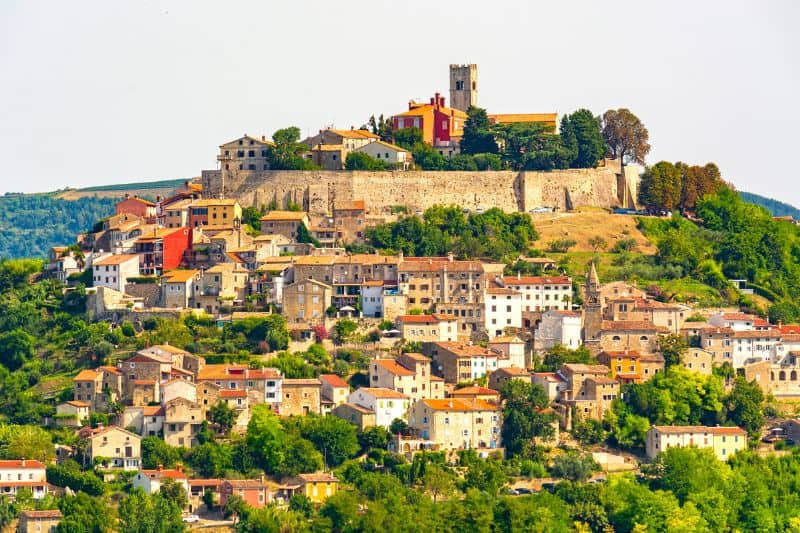
Motovun, perched above vineyards and truffle country, is around 45–60 minutes inland. It’s best visited early before tour buses arrive and parking becomes more complicated.
The town itself is small and easily explored in a couple of hours. The appeal lies in the views and the contrast with the coast rather than in a long checklist of sights.
There are several restaurants near the summit with wide views across the surrounding countryside — an appealing lunch stop if you time it well. Many tables appeared to be reserved later in the day, likely for organised groups, so if you’re planning to stay for lunch it’s worth booking ahead.
If you would prefer not to navigate the narrow access roads or parking areas, small-group inland Istria tours are available and typically include two or three hill towns in a single day.
Other Optional Day Trips
- Pula (around 40 minutes away) for those particularly interested in Roman history and its well-preserved amphitheatre.
- A slower day exploring smaller coastal villages or simply swimming near Rovinj itself.
Where to Stay in Rovinj
We stayed at Luxury Villa Orh Rovinj, located within the Old Town. The room was set beneath a sloping roof in a restored historic building, with the usual narrow stairs and compact layout you’d expect in this part of town.
A generous breakfast was included, served in a distinctive stone room — one of the most beautiful breakfast settings we’ve experienced in Europe.
If this property isn’t available for your dates, look for accommodation within or just outside the Old Town with clearly confirmed parking arrangements. Staying centrally makes early morning walks and relaxed evening dinners much easier, while properties just beyond the pedestrian zone can simplify access.
👉 Browse highly rated Old Town accommodation in Rovinj here.
Day 6-7 – Plitvice Lakes
Driving: Rovinj to Plitvice Lakes
Motorway route: Approx. 230 km | 3–3.5 hours
The fastest option follows the A8 and A1 motorways for much of the journey before turning inland toward the park.
Avoiding motorways: Approx. 200 km | 4–4.5 hours
Secondary roads pass through smaller towns and more rural stretches of inland Croatia. The distance is slightly shorter, but speeds are lower and progress is slower.
If you plan to stop along the way, the extra time on regional roads can make the drive feel less like a transfer and more like part of the trip.
Overnight: Plitvice Lakes
Optional Stop: Rastoke
Rastoke is an ideal spot for a break, roughly 30 minutes drive from the Lakes. Known for its small waterfalls and historic watermills, Rastoke is often referred to as a “mini Plitvice.” It’s far smaller and quieter, but it gives you a glimpse of the kind of scenery you’re heading towards.
You don’t need long here — roughly an hour to walk the paths and have lunch — but it breaks up the drive nicely and avoids arriving at Plitvice too early for check-in.
Visiting Plitvice Lakes
Two nights here makes a real difference. It allows you to arrive, settle in and rest before your walking day, rather than facing a long drive afterwards.
If you have a 9am ticket, you can usually enter slightly earlier or up to an hour later. It’s worth asking your accommodation provider which entrance is most convenient for where you’re staying and for their suggested route through the park — local advice can help you avoid doubling back or tackling the steepest sections first.
Plitvice is known for its crystal-clear turquoise water, cascading falls and dense greenery. The forests reflect almost perfectly in the still sections of the lakes. In good light, the colours can feel almost unreal.
We began in fine weather, but conditions shifted to steady – and then torrential – rain as we climbed. Water pooled in places where there was little drainage, and keeping shoes dry became impossible. Depending on the weather forecast, waterproof layers are advisable. The wooden boardwalks can also become crowded in peak season — a simple phone lanyard is sensible if you’re leaning out for photos.
Returning afterwards to quiet, cosy accommodation nearby felt especially welcome. A hot shower and an unhurried afternoon nap were exactly what was needed — one of the advantages of not rushing on to the next destination.
Where to Stay in Plitvice Lakes
We stayed at B&B Villa Sumrak Plitvica Rooms, a family-run guesthouse, located a short drive from the park. The rooms were spacious, quiet and beautifully decorated. After a full day walking in the park, returning somewhere comfortable and calm was very welcome.
Meals are offered on site and receive consistently strong reviews.
If you’re booking near Plitvice, prioritise:
- Easy access to your preferred park entrance
- On-site parking
- Early breakfast availability
- The option of dinner, especially if you don’t want to drive again after hiking.

Day 8-9 – Split
Driving: Plitvice Lakes to Split
Motorway route: Approx. 250 km | 2.5–3 hours
The fastest option follows the A1 south. Roads are modern and well maintained, with several rest stops along the way.
Avoiding motorways: Approx. 230 km | 4–4.5 hours
Secondary roads pass through smaller towns and more rural stretches of inland Dalmatia. Progress is slower but can feel less clinical than the motorway.
Overnight : Split
Lunch Stop: Trogir
Trogir sits just north of Split and makes a convenient stop en route. The Old Town occupies a small island connected by a short bridge and is largely pedestrian-only, so you’ll need to park outside the historic centre and walk in.
It’s worth planning parking in advance and setting your maps directly to a public car park near the bridge, rather than navigating blindly through narrow streets.
Once inside the Old Town, everything is compact and easy to explore in one to two hours. The stone lanes are short and manageable, with a pleasant waterfront lined with cafés and restaurants. It works well as a relaxed lunch stop rather than an overnight base, if you prefer to minimise hotel changes.
Leaving Trogir mid-afternoon still allows you to reach Split in time to settle into your accommodation before dinner.
Exploring Split
Two nights in Split is enough to explore the historic core without overloading the schedule.
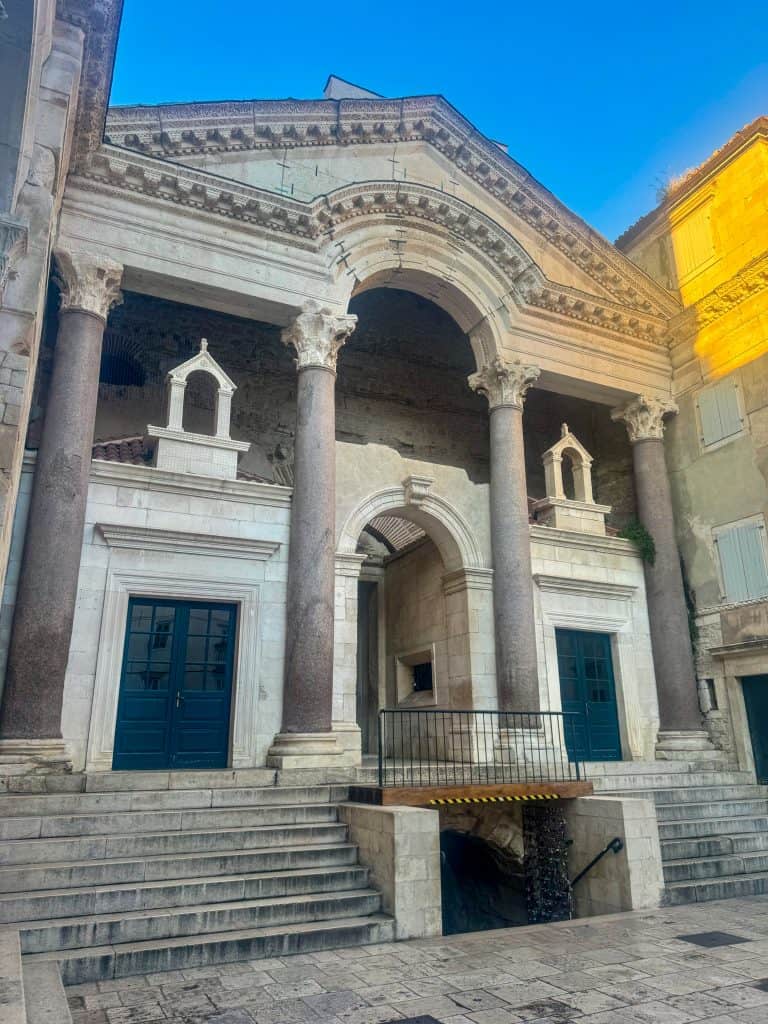
Diocletian’s Palace is not a standalone monument but the living heart of the city — Roman walls and courtyards are woven into everyday life. It’s worth wandering early in the morning before cruise passengers and day visitors arrive.
For historical context (always a good idea, in my opinion), consider booking a walking tour later in the afternoon or early evening when temperatures are cooler and the light is softer. This makes the experience more comfortable, particularly in summer.
Besides the palace complex, you might:
- Climb the bell tower for a view over the rooftops
- Visit the local market
- Walk up Marjan Hill for coastal views
- Simply spend time in the shaded squares within the palace walls
Split is busier and more urban than Rovinj, but two nights keeps it manageable while still allowing time to appreciate its Roman heritage.

Where to Stay in Split
Split’s historic centre sits largely within a pedestrian-only zone, so where you stay affects how you arrive and how you move around.
For this route — arriving by car and staying two nights — there are two practical approaches.
Inside Diocletian’s Palace (Maximum Atmosphere)
If you’d like to be immersed in the atmosphere, staying within the palace walls is memorable. You’ll step directly into the stone lanes each morning and evening, without needing transport.
Vehicles cannot enter the pedestrian zone, so parking must be arranged in advance and will usually be off-site for an additional fee. Accommodation inside the palace often involves stairs, compact layouts and cobbled streets, so be prepared to carry luggage from the nearest access point.
👉 Browse accommodation inside Diocletian’s Palace here.
Just Outside the Palace Walls
If you’re arriving by car, staying just beyond the historic centre can simplify things. You’ll be able to drive closer to your accommodation and then walk into the palace area in around 5–20 minutes.
Look for properties in neighbourhoods immediately surrounding the Old Town, where you can balance convenience with proximity.
👉 Browse accommodation near Split Old Town here.
Day 10 – Drive to Dubrovnik
Driving: Split to Dubrovnik
Coastal route (D8): Approx. 230 km | 3.5–4.5 hours
The Adriatic Highway follows the coastline for much of the journey, passing through numerous small towns with regular sea views. It’s the more scenic option but can be slow in peak season.
Inland motorway option: Approx. 260 km | 3–3.5 hours
The A1 motorway is faster and more direct, though less scenic. You’ll rejoin coastal roads as you approach Dubrovnik.
Traffic typically increases significantly as you near Dubrovnik, particularly in summer. Allow extra time.
If possible, drop luggage at your accommodation first and then return the hire car. Rental return locations in Dubrovnik are outside the Old Town and may not have a visible shopfront. Some are located within or beside major hotels or in shared public car parks, so confirm the exact address in advance and allow time to locate it.
Once the car is returned, you won’t need one for the remainder of your stay.

Day 11-13 – Dubrovnik
Three nights allows you to experience Dubrovnik properly rather than squeezing it into a day. It is undeniably popular — and once you see it, you understand why. The combination of medieval walls, tightly packed terracotta rooftops and intensely clear blue water is strikingly beautiful.
Allowing time here means you can walk the walls early, explore the lanes in the evening and step away during the busiest hours, when both crowds and heat are at their peak.
Walk the City Walls
Go early in the morning or later in the afternoon to avoid peak heat and congestion. The full circuit takes around two hours at a steady pace, longer if you pause for photographs.
Tickets are not inexpensive, but the views over the rooftops and across the Adriatic make it worthwhile. For those interested in more historical background, guided tours of the walls are available.
Take a Walking Tour
I almost always take a walking tour when I first arrive in a city — it’s the quickest way to get oriented and understand what you’re looking at. In Dubrovnik, a good guide adds important context, including the Siege of Dubrovnik (1991–1992) during the Croatian War of Independence and the city’s subsequent recovery.
Game of Thrones filming locations may also be included.
👉 Browse highly rated Dubrovnik walking tours here.
Visit Fort Lovrijenac
Perched on a rocky outcrop just outside the walls, Fort Lovrijenac offers a clear view back toward Dubrovnik’s rooftops and fortifications. It’s worth including while your city walls ticket is valid.
Hike Mt Srđ (Optional)
The hike up Mt Srđ is steady and can feel strenuous on a warmer day, particularly on the exposed sections. It’s achievable if you take your time, and the views over the Old Town and coastline are amazing. Consider taking the cable car back down, especially as parts of the path are rocky and uneven underfoot.
Getting Around
The Old Town is fully pedestrianised. If staying outside the walls — for example in Lapad — local buses run regularly, though they can be crowded in peak season. Tickets are purchased onboard (cash) or from kiosks.
Ride-share services such as Uber also operate in Dubrovnik and are often the simplest option for short transfers, particularly in the evening.
Optional Day Trips from Dubrovnik
If you’d like to add one organised outing during your three nights in Dubrovnik, these are good options:
🥾 Lokrum Island Scenic Hike: History, Nature & Stories
⛵ Elaphiti Islands: Luxury Pirate Ship Cruise
🇲🇪 Montenegro Day Trip: Perast, Kotor & Budva Small-Group Day Trip
Choosing Where to Stay in Dubrovnik
For this 14-day route — with the car returned on arrival — location is more about atmosphere than parking. These are three practical approaches.
Lapad (Quieter and More Relaxed)
On my first visit, I stayed in Lapad, around 10–15 minutes from the Old Town. It felt noticeably calmer, while still being easy to reach the historic centre by bus or ride-share.
👉 Browse accommodation options in Lapad here.
Near the Old Town (Walkable Access)
If you’d like easy access to the historic centre without staying inside the walls, look for accommodation within walking distance of Pile Gate or Ploče Gate.
👉 Browse accommodation near Dubrovnik Old Town here.
Inside the Old Town (Maximum Atmosphere)
Staying within the walls puts you in the centre of the action, especially appealing if you enjoy early morning walks or quieter evenings after the day-trippers have gone.
Be aware that properties often involve stairs and cobbled streets. Rolling suitcases are discouraged within the Old Town, so be prepared to carry luggage.
👉 View stays inside Dubrovnik Old Town here.

.
Day 14 – Departure
If flying out of Dubrovnik, allow extra time for airport transfers, particularly during peak summer months when traffic can be slow.
From Lapad or areas outside the Old Town, taxis and ride-share services such as Uber are straightforward and usually the simplest option. If staying near the Old Town, factor in the time required to walk to the nearest vehicle access point.
Dubrovnik Airport is located around 20–25 minutes from the city in light traffic, though this can increase significantly during busy periods.

14-Day Route Summary
🗺 14-Day Croatia Road Trip Overview
Start: Zagreb
Finish: Dubrovnik
Transport: One-way car hire
2 nights Zagreb
3 nights Rovinj (optional Motovun day trip)
2 nights Plitvice Lakes (via Rastoke)
2 nights Split (Trogir lunch stop en route)
3 nights Dubrovnik
Planning Considerations For This 14-Day Road Trip
Best Time for a Croatia Road Trip
Late May, June and September generally offer the best balance of good weather and manageable visitor numbers. July and August bring warmer sea temperatures and longer evenings, but also heavier traffic — particularly approaching Dubrovnik and around the national parks.
For a more detailed seasonal breakdown, see my 10-day Croatia road trip guide.
Driving in Croatia
Driving in Croatia is straightforward. Motorways are modern and well maintained, while secondary roads are generally in good condition but slower and occasionally narrow through historic centres.
Expect:
- Restricted vehicle access in Old Town areas
- Limited parking in historic centres
- Slower coastal traffic during summer
If you prefer a more relaxed driving experience, allow extra time and avoid scheduling long transfers after full sightseeing days — one of the reasons this 14-day version works well.
Car Hire Tips
One-way rentals between Zagreb and Dubrovnik are common and simplify the route considerably.
When booking:
- Compare providers rather than defaulting to the first option
- Confirm the exact drop-off location in Dubrovnik
- Check insurance coverage carefully
- Book early in peak months
Final Thoughts
Fourteen days in Croatia means you’re not constantly packing up or facing long drives after full sightseeing days. You still see the major destinations, but you also have time for quieter mornings and unhurried evenings.
If you’re deciding between a shorter and longer trip, my 10-day Croatia itinerary follows a similar north–south route but at a quicker pace and without time in Istria. This 14-day version includes three nights in Rovinj and allows more space in each destination.
Frequently Asked Questions: Croatia 14-Day Road Trip
Yes. Fourteen days allows you to see a significant stretch of the country without feeling rushed. With two or three nights in each base, you can explore properly while keeping driving days manageable.
If you have less time, a 10-day version covers similar highlights at a quicker pace.
For this specific route, yes. A car makes it much easier to reach Plitvice Lakes and move efficiently between coastal towns. While some sections are possible by bus and ferry, using public transport would require more time and less flexibility.
Driving is generally straightforward. Motorways are modern and well maintained, and regional roads are in good condition. The main challenges are navigating pedestrian-only historic centres and managing summer traffic near Dubrovnik.
Late May, June and September typically offer warm weather with fewer crowds. July and August bring peak visitor numbers and heavier traffic, particularly along the coast.
Yes. If you prefer to shorten the route, you could finish in Split and return your car there. Alternatively, you could extend the trip into Slovenia from Istria before continuing south.
Two nights makes the visit more comfortable. It allows you to walk the park without immediately facing a long drive and provides flexibility if weather conditions change.
Yes, particularly between June and September. Smaller properties in Rovinj and near Plitvice can book out early.