9 Best Things to Do in Lightning Ridge: From Fossicking to Outback Pub Tours
Freedom Years Travel contains affiliate links. If you make a purchase using one of the links below, we may receive compensation at no extra cost to you. We only recommend products and services we use and trust. Read our disclaimer for more information.
From searching for opals in mine tailings to exploring underground attractions and visiting character-filled outback pubs, there’s more to do in Lightning Ridge than many first-time visitors expect.
We spent four nights exploring the town and surrounding opal fields, giving us time to experience many of the area’s best-known attractions as well as a few lesser-known highlights. Whether you’re interested in opal mining, outback history, fossicking or simply discovering a different side of regional Australia, these are the experiences I would recommend adding to your itinerary.
- Recommended stay: 2–3 days
- Best for: Opal enthusiasts, road trippers and travellers interested in outback Australia
- Don’t miss: Outback Opal Tour, fossicking and the Opal Miners Hall of Fame
- Getting around: A standard vehicle is suitable for most attractions in normal conditions
- Best time to visit: March–May and September–October
Still deciding whether to make the trip? Read my guide to Is Lightning Ridge Worth Visiting? to find out whether the town is right for you, and Driving to Lightning Ridge? Here’s What To Expect for practical advice on the journey.
1. Take a Tour of the Opal Fields and Famous Outback Pubs
One of the most enjoyable experiences we had in Lightning Ridge was spending a day exploring the surrounding opal fields with Outback Opal Tours. The full-day tour visits the Sheepyard, Glengarry and Grawin opal fields, combining local history, mining insights, fossicking opportunities and visits to three iconic outback pubs. It proved to be one of the best ways to gain a deeper understanding of the people and places that make Lightning Ridge unique.
Our guide, Stacey, has lived in Lightning Ridge for more than 15 years and kept the commentary flowing throughout the day. As the wife of an opal miner, she was able to explain the realities of life on the fields, from the equipment used to extract opals to the challenges of making a living in such an unpredictable industry. Along the way, she shared stories about local characters, mining life and the many people who arrived in Lightning Ridge planning a short stay and never left.
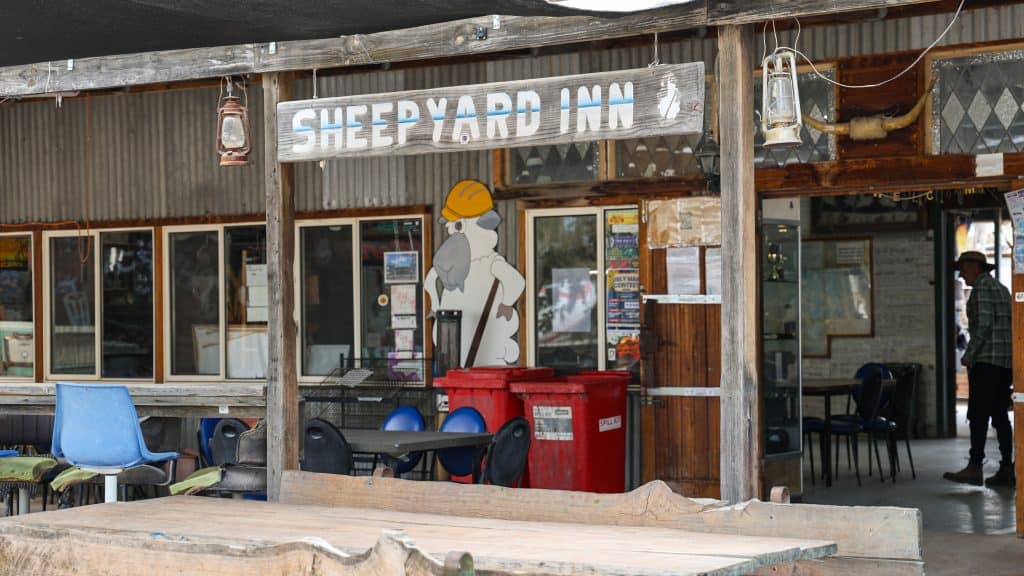
The first stop was the Sheepyard Inn, where warm scones with jam and cream were served for morning tea. Like all three pubs, it was packed with character, quirky signs and decades of mining history. Outside, we had our first opportunity to fossick through the tailings. Stacey demonstrated what to look for, explained how to distinguish opal from potch and shared practical tips that made the whole process far less intimidating for beginners.
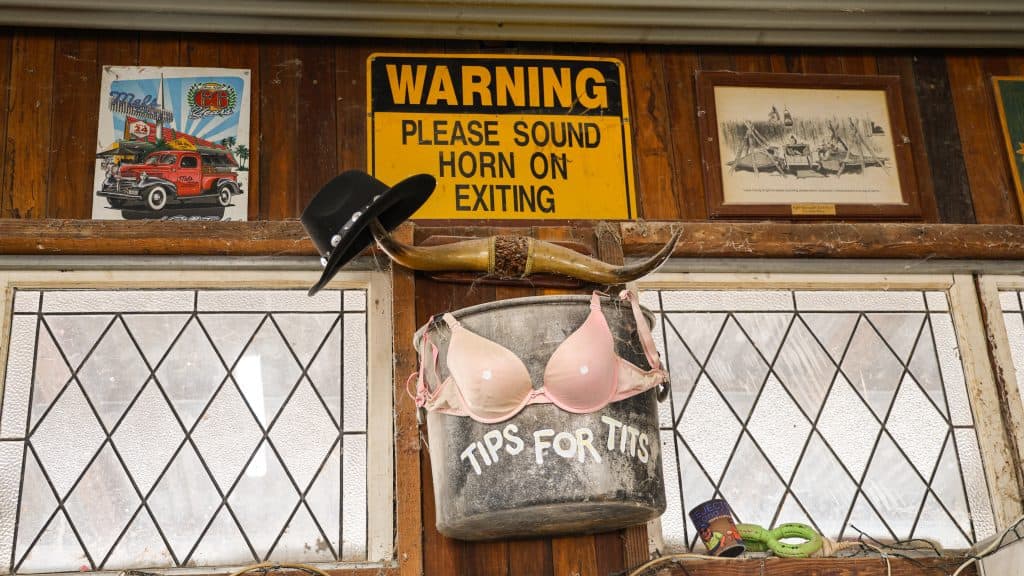
After a scenic drive through the opal fields, we stopped at the Glengarry Hilton for lunch and another chance to fossick through freshly washed heaps. This was also where Mr FYT got to meet one of his heroes from Outback Opal Hunters — miner Les Walsh, who was generous with his time and happy to chat with visitors.
The final stop was Club in the Scrub, another pub that felt entirely at home in the opal fields. Between the handmade signs, local characters, live music on the verandah and a golf course without a single blade of grass, it provided a memorable glimpse into outback life. One of the miners even gifted an opal to a teenager on our tour after spending time chatting with him — a small but memorable act of generosity.
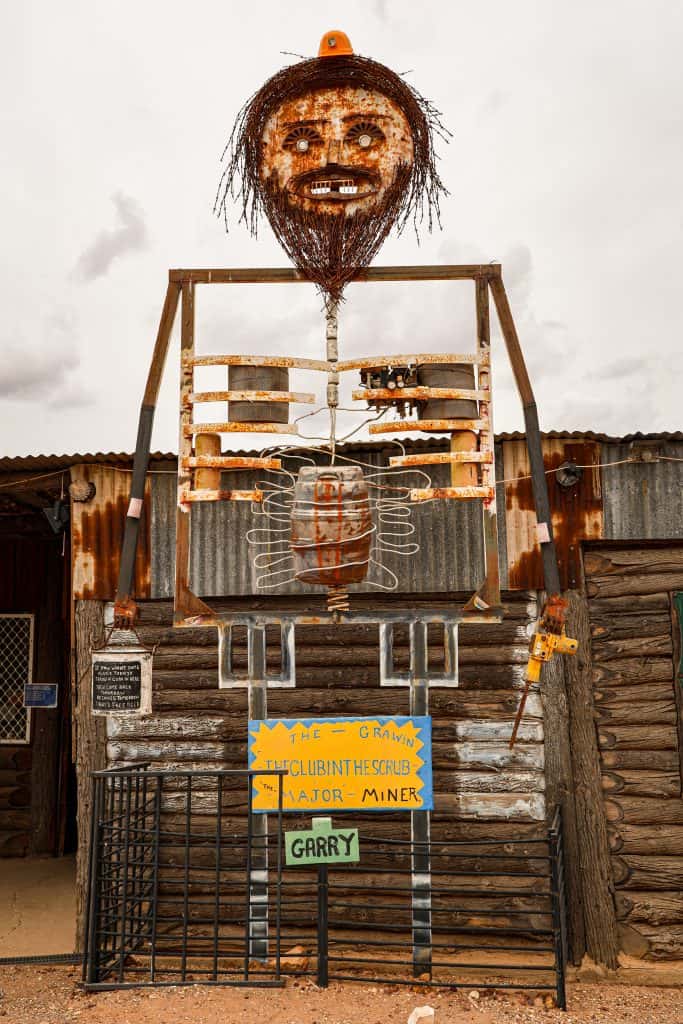

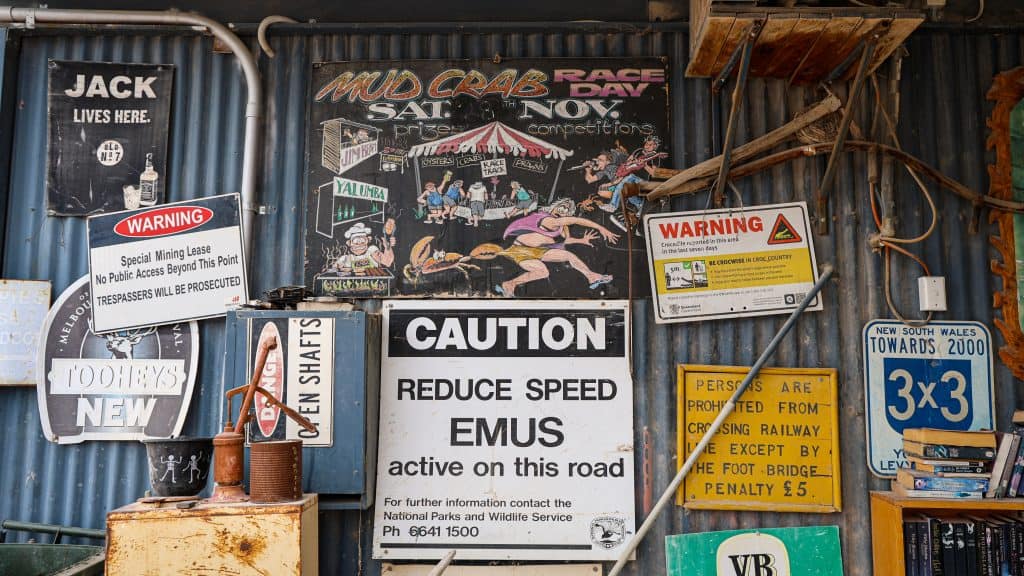
Throughout the day, we learned far more than we expected about the history, culture and personalities of the opal fields. One story involved Stacey’s brief stint as a census collector, where she discovered that many locals had little interest in completing government forms — a humorous example of the independent streak that seems deeply woven into the community.
The tour also saved us from navigating some of the roughest roads ourselves. Several other passengers commented that they were glad they had left the driving to someone else, and we felt the same way. By the end of the day, we had a much better appreciation of the opal fields and the people who call them home. For anyone interested in learning more about Lightning Ridge beyond the main tourist attractions, this was one of the most worthwhile experiences of our visit.
Practical Information: When we visited, bookings were made directly with the operator by phone rather than online, and tours only ran once a minimum number of participants had been reached.

2. Try Fossicking for Opals
For many visitors, fossicking is one of the main reasons for coming to Lightning Ridge. After all, this is the black opal capital of the world, and the thought of finding even a small piece of opal is hard to resist.
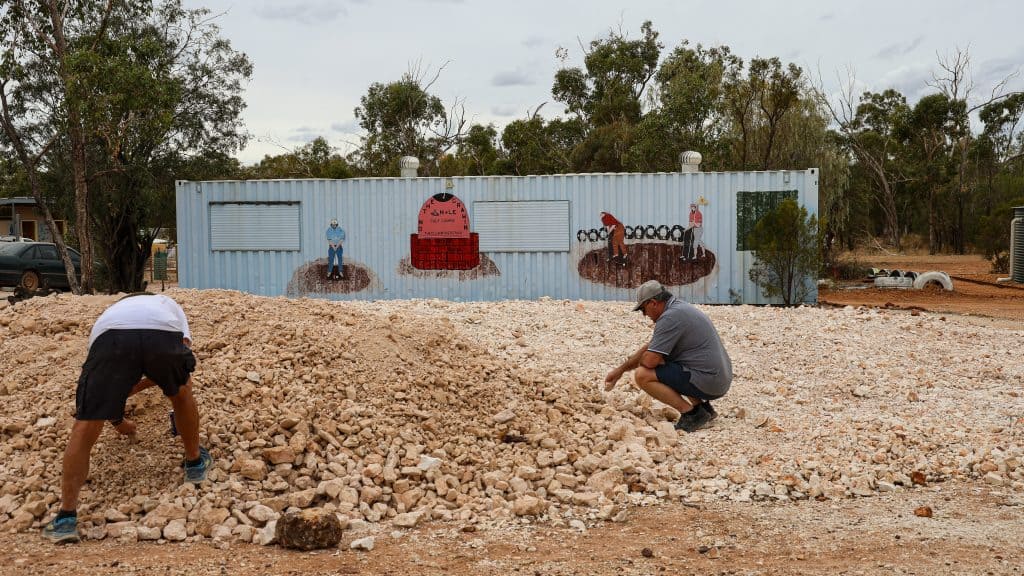
Fortunately, you don’t need to own a mining claim or spend days digging shafts to give it a try. Several attractions around town provide public tailings heaps where visitors can search through material that has already been brought to the surface. During our stay, we found fossicking opportunities at the Tourist Information Centre, the Opal Hall of Fame, the underground mine tour and outside each of the pubs visited on the Outback Opal Tour.
One of the advantages of joining the Outback Opal Tour was having an experienced local show us what to look for. Our guide, Stacey, demonstrated how to search through the tailings, explained how to distinguish opal from potch and shared a number of practical tips that would have taken much longer to work out on our own. We quickly learned that good lighting helps enormously, and that a small spray bottle of water can make it much easier to spot flashes of colour hidden beneath the dust.
Don’t arrive expecting to strike it rich. Most visitors will be pleased to find even a small fragment showing a little colour. What surprised me was how easy it was to lose track of time once we started searching through the tailings. Despite not finding anything particularly valuable, we found ourselves stopping for “just one more look” at several different fossicking heaps during our stay.
⛏️ Fossicking Tips for Beginners
- Wear old clothes and sturdy shoes.
- Long pants are helpful if you’ll be kneeling around the tailings heaps.
- Bring a small scraper or three-pronged garden tool.
- A spray bottle of water can help reveal flashes of colour.
- Take something to sit or kneel on, such as a small groundsheet or piece of plastic.
- Bring a small container to store any finds.
- Sunny conditions make it much easier to spot opal than overcast weather.
Even if you don’t find anything worth keeping, fossicking is a fun way to experience a small part of what has drawn hopeful miners to Lightning Ridge for more than a century.
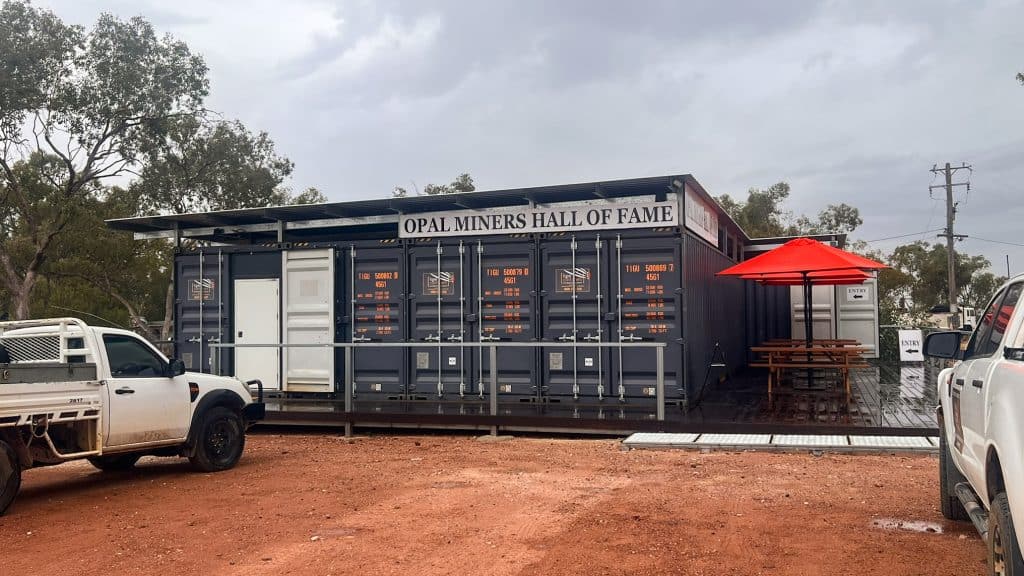
3. Visit the Opal Miners Hall of Fame
One of the newer attractions in Lightning Ridge, the Opal Miners Hall of Fame provides an engaging introduction to the geology, history and people behind Australia’s black opal industry.
Rather than a traditional museum, the attraction is spread across a series of shipping containers, with visitors moving through a sequence of immersive audio-visual presentations that explain how Lightning Ridge came to be. Along the way, you’ll learn about the ancient Eromanga Sea that once covered much of inland Australia, how opals formed over millions of years, and why Lightning Ridge produces some of the world’s most valuable black opals.
The story then shifts to the discovery of opal in the area and the rush of prospectors who arrived in the early 1900s hoping to make their fortune. The presentations also explore the prehistoric world that existed here millions of years ago, including dinosaurs and the opalised fossils that continue to be found in the region today.
One of the highlights is a series of video interviews with local miners. Their stories provide an insight into the persistence, optimism and occasional luck required to make a living in the opal fields. A quote that made us laugh came from a miner who described finding opal as being “like you’ve been shot in the arse with a rainbow”.
What makes the attraction even more impressive is that it was created by a local miner and his wife. During our visit, the owner personally guided us through the displays and shared his own story of spending five years mining before finally discovering an opal that made all the hard work worthwhile. Hearing that firsthand account really reinforced the persistence, resilience and perhaps a touch of craziness required to make a living in the opal fields.
Visitors can also try fossicking through the tailings outside and browse the jewellery showroom, which features a range of locally cut opals. Whether you’re already interested in gemstones or simply want a better understanding of the forces that shaped Lightning Ridge, this is one of the most informative attractions in town.
4. Go Underground on a Mine Tour
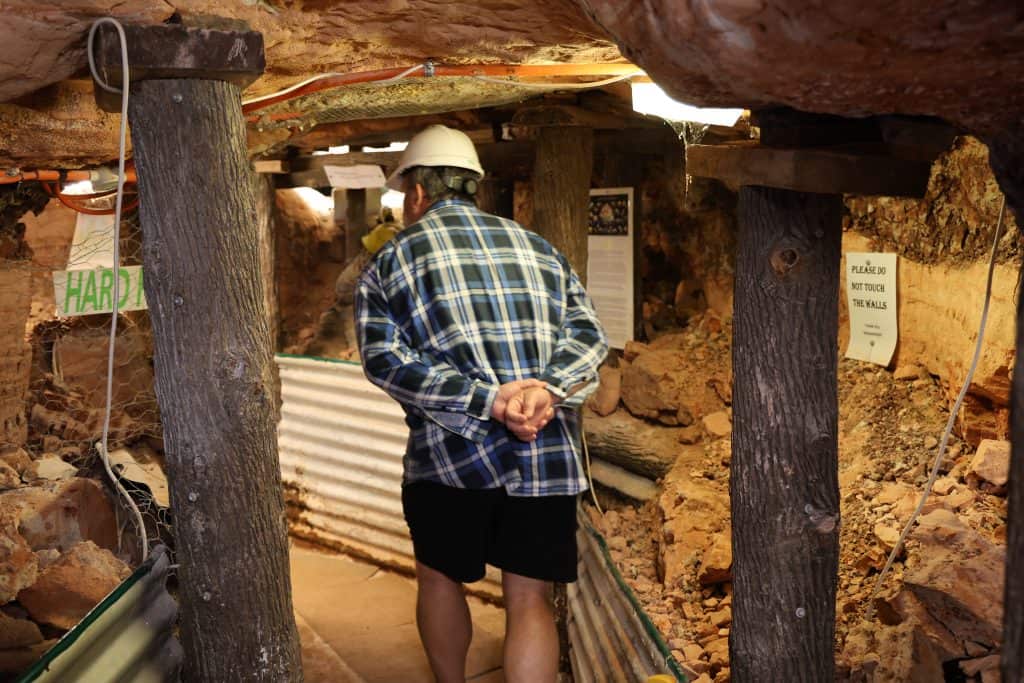
If you’ve ever watched Outback Opal Hunters and wondered what conditions are really like beneath the surface, taking an underground mine tour is one of the best ways to find out. It also provides a much greater appreciation of the hard work, uncertainty and persistence involved in searching for black opal.
We chose the Opal Mine Adventure Walk-In Mine. To be fair, an impulse purchase of a pair of opal earrings had already done some damage to our sightseeing budget, and this was the more affordable of the two underground options. The attraction is largely self-guided, allowing visitors to explore a former opal mine at their own pace while viewing the tunnels, cypress pine supports and mining equipment used over the years.
Audio-visual displays throughout the mine explain how mining methods have evolved over time, from the early days when miners worked by candlelight, chipping away in the darkness until they heard the distinctive glassy sound that suggested opal might be present, through to the more mechanised techniques used today. The experience concludes with a short video presentation about life on the opal fields.

The other major underground attraction in Lightning Ridge is the Chambers of the Black Hand. The upper level features hundreds of sculptures carved directly into the sandstone walls of a former mine. Remarkably, the carvings were created using nothing more than a butter knife. Visitors can explore the carving chamber at their own pace or join a separate guided tour of the mine workings on the level below. Combined tickets covering both experiences are also available.
Although we didn’t visit the Chambers of the Black Hand ourselves, it was one of the attractions most frequently recommended by locals and fellow travellers during our stay. The guided underground mine tours operate only a few times each day, which is why advance online bookings are recommended if you plan to visit.
One advantage of the Opal Mine Adventure Walk-In Mine is that it involves relatively few steps and less walking than some underground experiences. If mobility is a concern, it’s worth discussing the available options with the Tourist Information Centre before booking.
Regardless of which tour you choose, spending time underground adds valuable context to everything else you’ll see in Lightning Ridge. After learning how difficult it is to extract opal from the ground, it’s hard not to look at the stones in the jewellery shops with a little more appreciation.
5. Browse Lightning Ridge’s Opal Shops
No visit to Lightning Ridge would be complete without spending some time browsing the local opal shops. Even if you’re not planning to make a purchase, the displays provide an opportunity to see the incredible colours and patterns that have made Lightning Ridge black opals famous around the world.
If you are interested in buying an opal or a piece of jewellery, you’ll find plenty of options throughout town. In addition to specialist opal dealers, many of the major tourist attractions also have jewellery showrooms featuring locally cut and polished stones. The Tourist Information Centre can provide a list of local dealers if you’d like to compare styles, prices and settings during your stay.
During our visit, we spent time browsing at The Opal Bin and Down to Earth Opals. Staff at both stores were generous with their time and happy to explain the differences between various types of opal, regardless of whether a purchase was likely. Before arriving in Lightning Ridge, I would have struggled to explain the difference between black opal, doublets and potch. By the end of our stay, I had a much better understanding of why some stones command such extraordinary prices.
One of the highlights at Down to Earth Opals was seeing the famous Fire of Stone opal. The stone was discovered by miners featured on Outback Opal Hunters and later sold for around $168,000. Luckily for tourists, the owners chose to leave it on display so visitors could admire it.
Down to Earth Opals also offers free opal cutting demonstrations twice a week between March and October. Unfortunately, we only learned about these demonstrations towards the end of our stay and had already missed them. If you’re interested in seeing how rough opal is transformed into a finished gemstone, it’s worth dropping into the store early in your visit to confirm the current demonstration times.
Be warned that browsing opal shops can be dangerous for the travel budget! I’ve always been drawn to opals, and was told that “opals choose you” — you’ll know the right piece when you see it. After browsing the displays around town, I could see exactly what that means. There were several pieces calling my name, and if I’m ever lucky enough to enjoy a significant financial windfall, I know exactly where I’ll be returning.
6. Visit the John Murray Art Gallery
The John Murray Art Gallery was one of the more enjoyable surprises of our visit to Lightning Ridge. Murray is one of Australia’s best-known outback artists, and his work has become closely associated with the town.
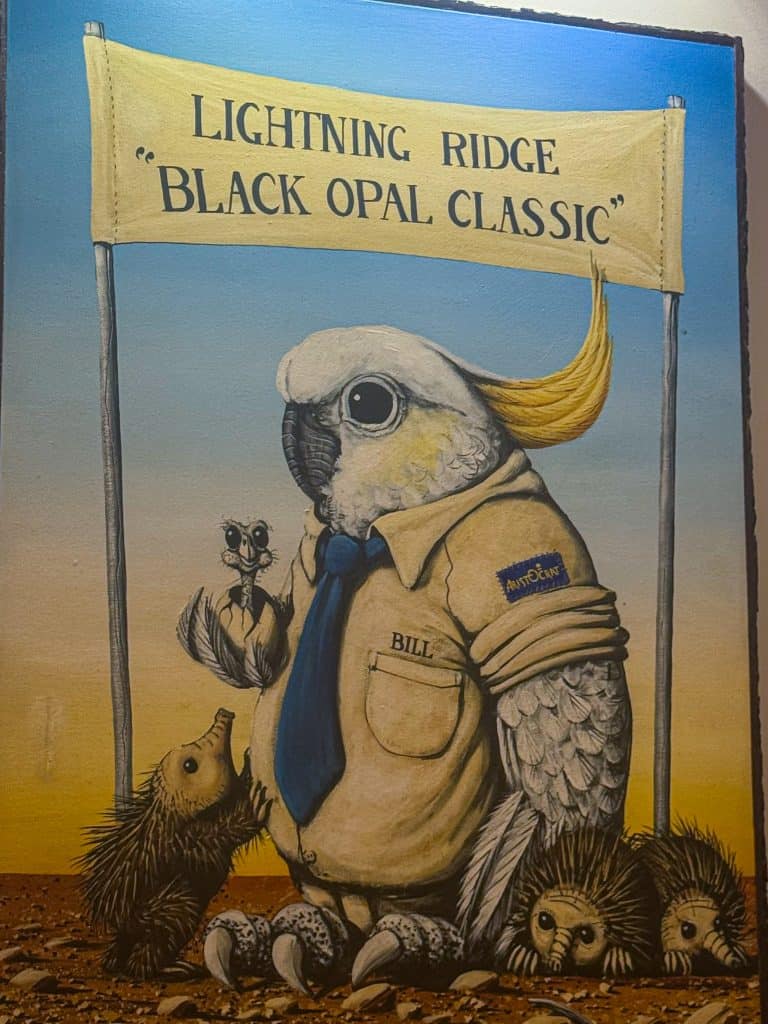
His paintings are colourful, humorous and unmistakably Australian, featuring emus, cockatoos and plenty of other outback characters. Even if you’re not normally someone who seeks out art galleries while travelling, I’d highly recommend making time for this one. Stepping inside, it’s unlike anything I expected to find in Lightning Ridge.
Photography isn’t permitted inside the gallery, but visitors are welcome to browse the collection at their own pace. Original artworks are available for purchase, along with a range of more affordable prints and souvenirs. While we didn’t leave with an original painting, we did come home with a John Murray stubby cooler and fridge magnet.
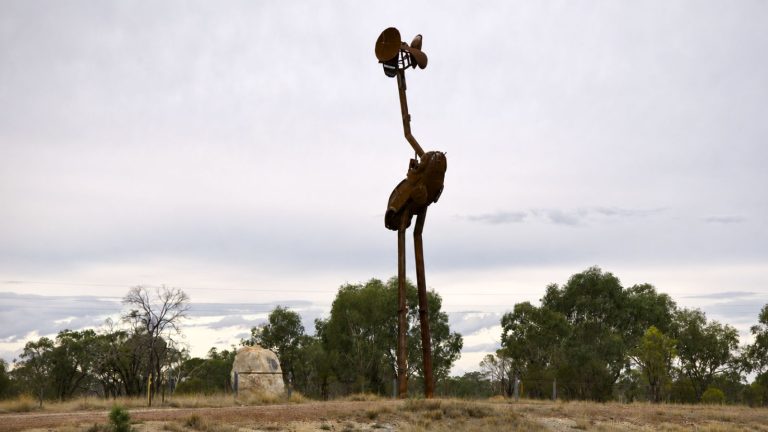
You’ll also encounter John Murray’s work throughout Lightning Ridge. His artwork appears on murals around town and even inside the Bowling Club. He is also responsible for Stanley, the giant emu sculpture that has become one of the town’s most recognisable landmarks. Standing 18.3 metres high, Stanley has become one of Lightning Ridge’s most photographed attractions.
Whether you’re an art lover or not, the gallery offers a welcome change of pace from the town’s mining attractions and provides a different perspective on outback Australia.

7. See Opalised Dinosaurs at the Australian Opal Centre
Most visitors come to Lightning Ridge expecting to learn about opals, but many are surprised to discover that the town is also one of Australia’s most important sites for opalised fossils.
The Australian Opal Centre houses a fascinating collection of fossils, including dinosaur bones that have been partially or completely replaced by opal over millions of years. These rare specimens provide a glimpse into a time when inland Australia was covered by the ancient Eromanga Sea and inhabited by creatures very different from those found in the region today.
During our visit, we spent time examining displays of opalised bones and learning about the prehistoric creatures that once lived in the area. One of the most impressive exhibits was a large opalised dinosaur bone discovered near the Sheepyard opal fields and later donated to the museum.
One thing you’ll quickly discover in Lightning Ridge is that locals are happy to chat. While we were looking through the displays, an old miner struck up a conversation and shared a few extra stories about the exhibits. It was one of many occasions during our stay when a chance conversation added a little extra colour and context beyond what was written on the information boards.
The Australian Opal Centre also presents Spark, a cinematic celebration of Lightning Ridge that combines storytelling, projections and the history of the region in an outdoor setting. The experience runs from Easter through to the September/October school holidays, typically three nights each week. We didn’t attend during our visit, but it sounded like an interesting way to experience a different side of Lightning Ridge after dark. If you’re interested, pick up a brochure from the Australian Opal Centre for current schedules and booking information.
8. Relax in the Artesian Bore Baths
The Lightning Ridge Bore Baths are one of the town’s most popular attractions and offer visitors the chance to soak in naturally heated artesian water under the open sky.
Fed by water from the Great Artesian Basin, the baths maintain a temperature of around 40°C year-round. They’re also free to use, making them one of the more affordable activities in town.
We had every intention of visiting during our stay, but a combination of cold temperatures, wind and rain saw us completely wimp out. Although the water is warm, you eventually have to get out!
The baths are popular with both visitors and locals, particularly during the cooler months when the contrast between the warm water and crisp evening air is at its greatest. Several people suggested visiting around sunset or after dark, when relaxing in the warm water beneath a star-filled outback sky becomes part of the experience.
Located a short drive from the town centre, the baths are open 24 hours a day, closing only briefly at 10am for cleaning. If you’re looking for a relaxing break from fossicking, mine tours and sightseeing, the Bore Baths are one of Lightning Ridge’s most frequently recommended attractions.
9. Follow the Car Door Tours
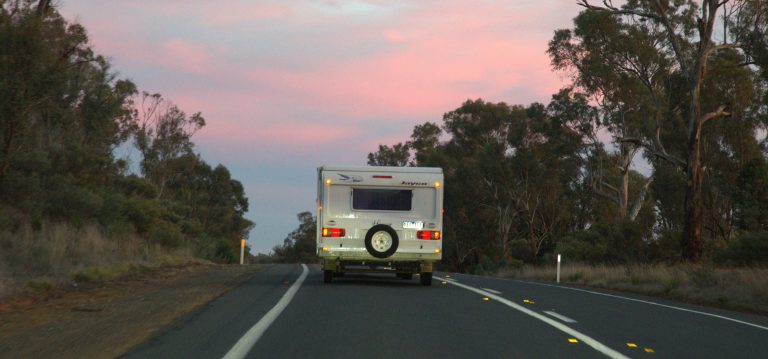
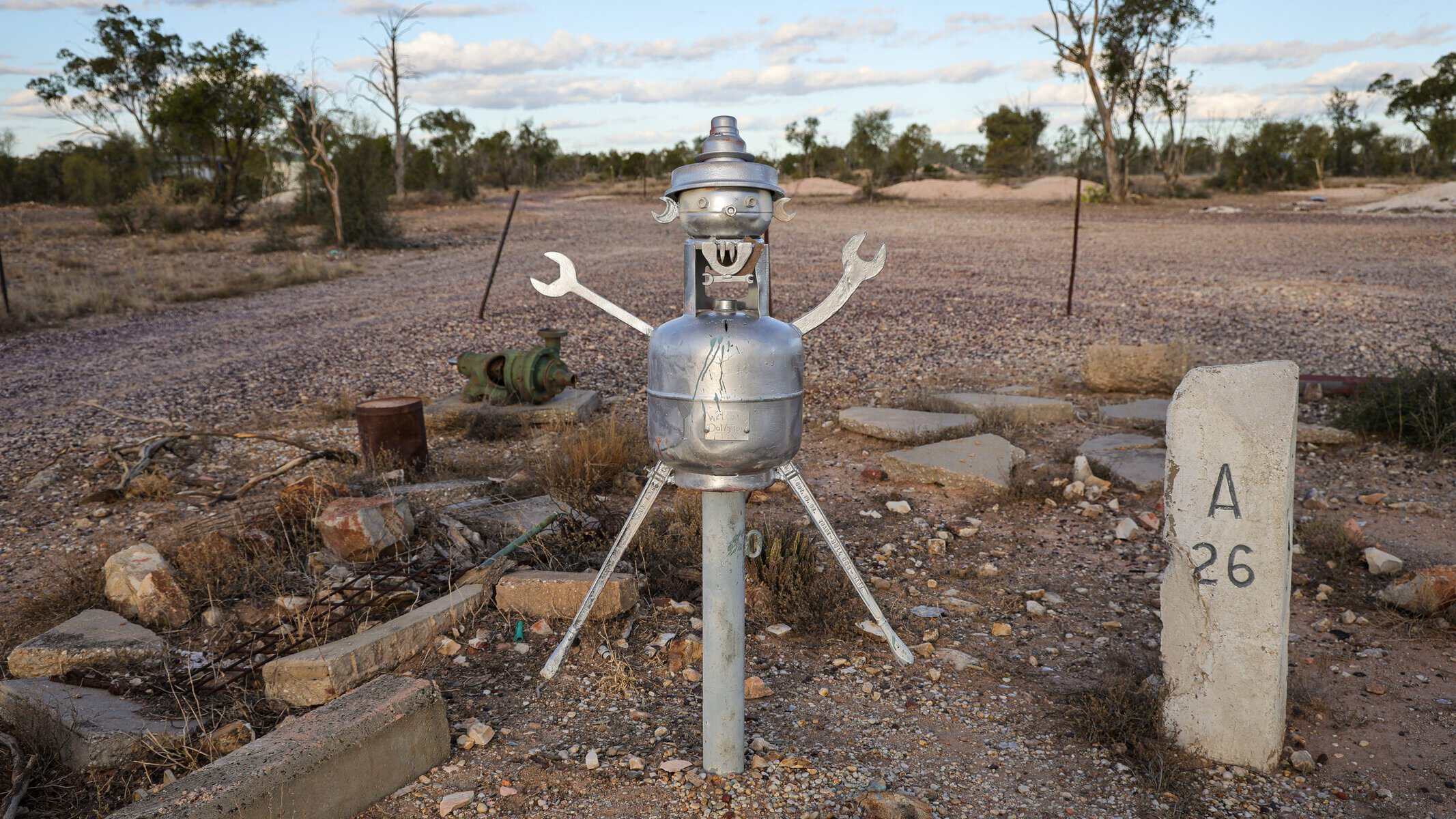
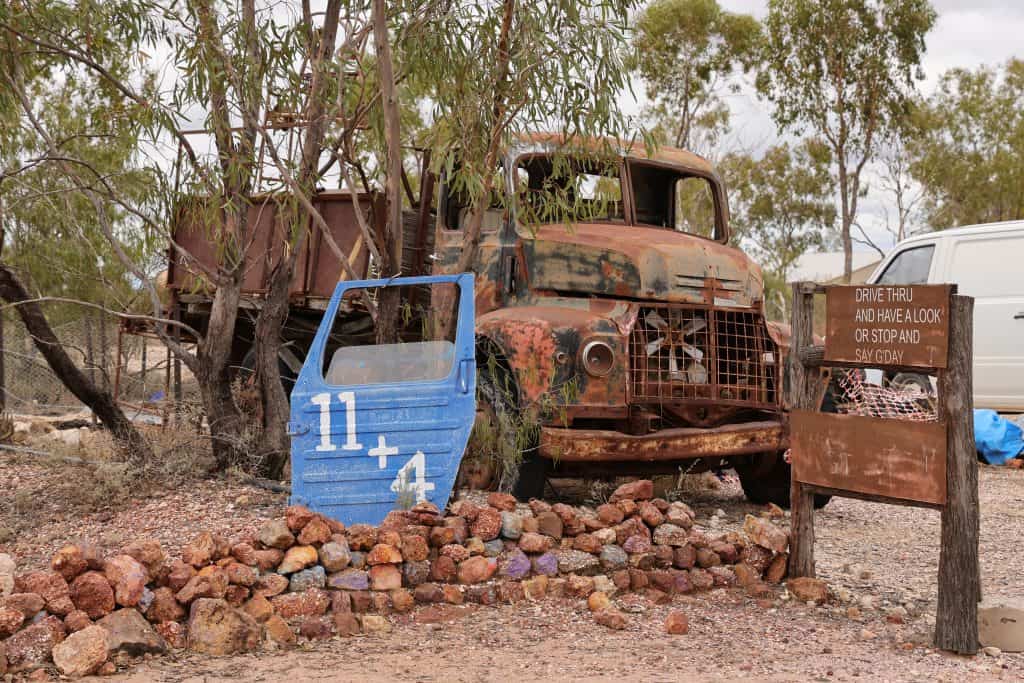
The best way to explore beyond the town centre is to follow one of Lightning Ridge’s famous Car Door Tours. These self-drive routes are marked by painted car doors placed along the roadside, guiding visitors through different parts of the surrounding opal fields.
Maps for all four tours are available from the Tourist Information Centre, along with estimated driving times and information about the attractions along each route. We completed three of the four tours during our stay, missing only the Red Route.
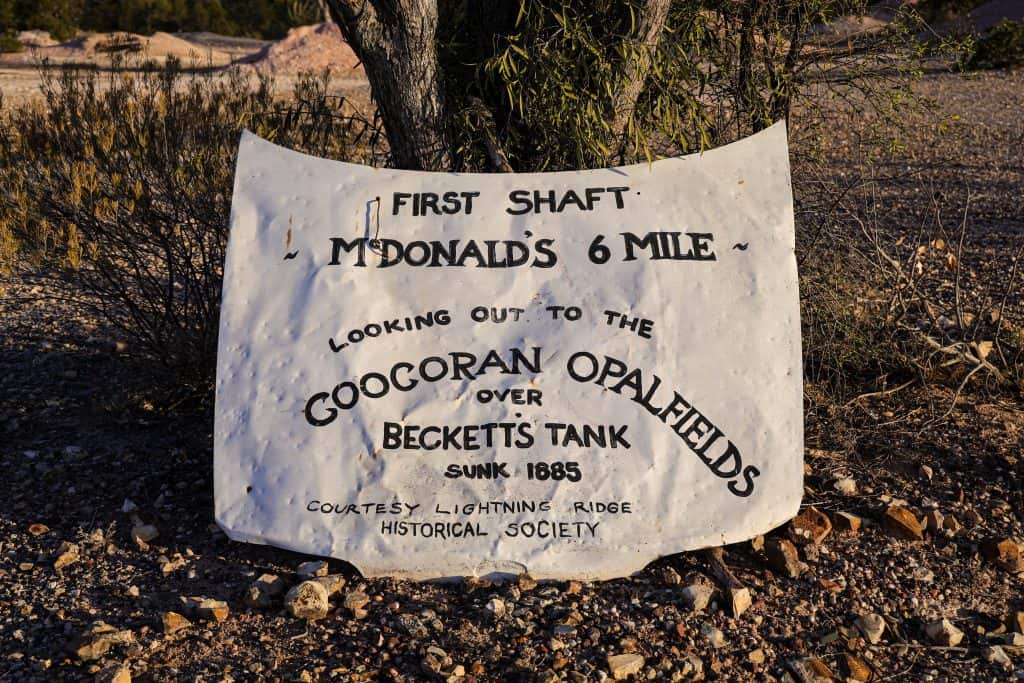
The Green Tour is often recommended as a good introduction to Lightning Ridge and includes several of the area’s best-known sights. One of the stops is Nettleton’s First Shaft, marking the location where Charlie Nettleton discovered black opal in the early 1900s and helped trigger the rush that transformed Lightning Ridge into Australia’s black opal capital.
The route also includes a sunset lookout overlooking the opal fields. Bringing a couple of folding chairs and some picnic supplies is a popular way to enjoy the experience. The Green Tour also passes the quirky Beer Can House, one of several unusual attractions scattered throughout the opal fields.
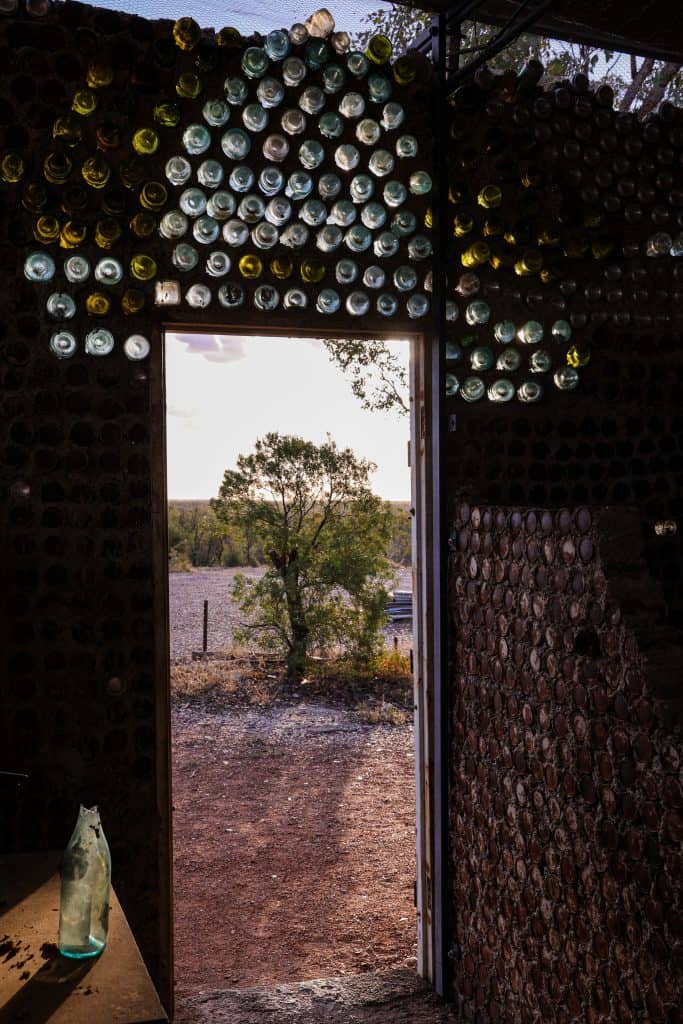
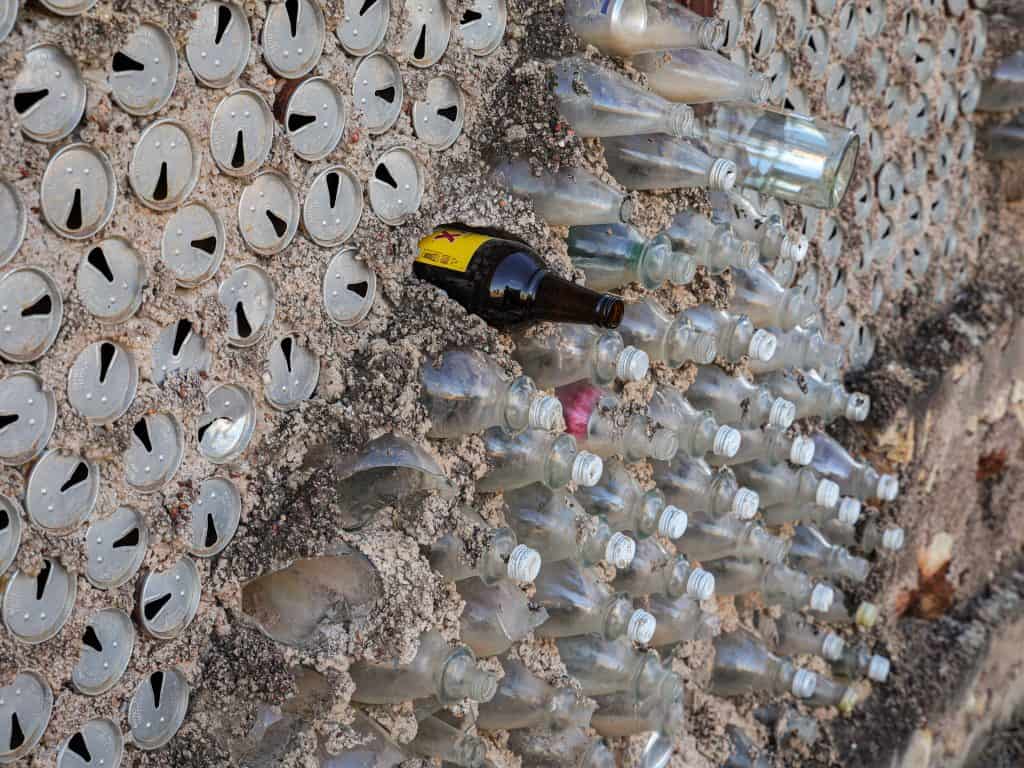
Other routes visit attractions such as Lunatic Hill, a former open-cut mine that provides a good appreciation of the scale of mining activity around Lightning Ridge, as well as unusual landmarks including the Bottle House and Amigo’s Castle.
Where to Eat in Lightning Ridge
After a day spent fossicking, touring mines and exploring the opal fields, you’ll probably be ready for a decent meal. While Lightning Ridge isn’t a destination that people visit for the food alone, we found several worthwhile dining options during our stay.
Lightning Ridge Bowling Club
Some of our favourite meals of the trip was at the Lightning Ridge Bowling Club. Visitors are welcome, although a small membership fee is required to enter. The good news is that the membership fee is quickly recouped as soon as you purchase any meals or beverages.
The menu focuses on classic club favourites, with generous portions and reasonable prices. We enjoyed our meal enough that we returned several times over. The club is also worth a look for the John Murray artwork displayed throughout the building.

Opal Cafe
For breakfast, we enjoyed the Opal Café in the main street. The café serves breakfast, lunch and coffee, making it a convenient stop before heading out for a day of sightseeing. Their French toast was delicious.
Bruno’s Italian Restaurant
Although we didn’t eat at Bruno’s ourselves, it was frequently mentioned by other travellers. Worth considering if you’re craving a change from pub meals and club dining.
Where to Stay in Lightning Ridge
Accommodation in Lightning Ridge ranges from motels and caravan parks to quirky outback stays. While most attractions are only a short drive apart, I found it useful to stay close enough to town to easily access restaurants, the Bowling Club and the Tourist Information Centre.
Holiday Hut
We spent four nights at Holiday Hut, an off-grid tiny home. The accommodation was an easy walk to the main street, yet far enough away to be completely quiet in the evenings. Like most of the Lightning Ridge locals, our host was welcoming and friendly, with lots of helpful tips.
Other Accommodation Options
Visitors looking for a more conventional stay will find a range of motels, cabins and caravan parks throughout town.
👉 Check current accommodation prices and availability in Lightning Ridge
Final Thoughts
There’s far more to do in Lightning Ridge than simply browse opal jewellery stores. Whether you’re fossicking through mine tailings, exploring underground tunnels, admiring John Murray’s artwork or enjoying a meal at one of the famous outback pubs, the town offers experiences that you won’t find anywhere else in Australia.
The Outback Opal Tour, Opal Hall of Fame and fossicking opportunities were particular highlights for us, but every visitor will probably leave with a different favourite. That’s part of what makes Lightning Ridge such an interesting place to explore.
If you’re planning a visit, allow enough time to get beyond the main street and into the opal fields themselves. That’s where many of the most memorable experiences are found.
Planning Your Lightning Ridge Trip?
If you’re planning a visit to Lightning Ridge, these guides may also help:
👉 Is Lightning Ridge Worth Visiting? What It’s Really Like in Australia’s Opal Town
Honest reflections on what surprised us about Lightning Ridge, who will enjoy it most and whether it’s worth adding to your itinerary.
👉 Driving to Lightning Ridge? Here’s What To Expect
Road conditions, fuel stops, wildlife, mobile reception and what the journey is actually like.
Frequently Asked Questions
I recommend allowing at least two full days in Lightning Ridge. This gives you enough time to explore the opal fields, try fossicking, visit a mine tour and see some of the town’s museums and attractions. We spent four nights in town and never felt rushed.
Yes. Several attractions around Lightning Ridge provide public tailings heaps where visitors can search for opal. Popular fossicking locations include the Tourist Information Centre, Opal Hall of Fame, Opal Mine Adventure Walk-In Mine and the opal field pubs visited on the Outback Opal Tour.
No. Most visitors can comfortably explore Lightning Ridge and the major attractions in a standard vehicle. We completed three of the four Car Door Tours in a regular car without any problems. Conditions can change after rain, so check locally if you’re planning to visit more remote areas.
The two most popular underground experiences are the Opal Mine Adventure Walk-In Mine and the Chambers of the Black Hand. The Walk-In Mine provides a self-guided introduction to underground mining, while the Chambers of the Black Hand combines sandstone carvings with guided mine tours on a lower level.
For us, the Outback Opal Tour was one of the highlights of our visit. The full-day tour combines visits to the opal fields, fossicking opportunities, local history and stops at three famous outback pubs. It provided insights into life on the opal fields that we would not have gained exploring independently.
Yes. The Lightning Ridge Bore Baths are free to use and are open 24 hours a day, except for a short closure at 10am for cleaning. The naturally heated artesian water remains warm year-round.