

3-Day Kraków Itinerary: Discover the Best of Kraków (With an Optional 4th Day)
Freedom Years Travel contains affiliate links. If you make a purchase using one of the links below, we may receive compensation at no extra cost to you. We only recommend products and services we use and trust. Read our disclaimer for more information.
Kraków is one of Europe’s most captivating cities — and this 3-day itinerary will help you see why. With its grand medieval architecture, poignant Jewish history, and thriving café culture, Kraków deserves far more than a hurried day trip. After spending three days here on my first visit, I left with a nagging sense of unfinished business. So I returned the following year — and still wasn’t ready to leave.
This Kraków 3-day itinerary brings together the best of both trips. You’ll explore the Old Town and Wawel Castle, uncover the moving stories of Kazimierz and Auschwitz, and enjoy the simple pleasure of sitting in the Main Market Square with a coffee and nowhere else to be.
Over three days, you’ll take in the must-sees, enjoy time to simply soak up the atmosphere, and pick up a few dining tips along the way. I’ve also included an optional fourth day if you’d like to explore further or enjoy a more relaxed pace. Whether it’s your first visit or a long-awaited return, this Kraków itinerary will help you make the most of every moment.

Day 1 – Exploring the Old Town
There’s no better way to orient yourself in Kraków than with a morning walking tour of the Old Town. It’s my go-to formula whenever I arrive in a new city — walking tours offer a fantastic overview of local history, culture, and layout.
Walking Tour of Kraków Old Town and Wawel Castle
On day one, I recommend the Kraków Old Town & Wawel Castle Free Walking Tour with GuruWalk. This tip-based tour is an excellent way to explore Kraków’s medieval heart while hearing stories that bring the city’s past to life.
The route begins at the Barbican and winds through cobbled streets, past churches that withstood Mongol invasions, and into the Main Market Square (Rynek Główny). You’ll hear the tale behind the hourly trumpet call from St Mary’s Basilica — abruptly cut off mid-note in memory of the trumpeter shot while warning of an attack.
Along the way, you’ll also visit places connected to Pope John Paul II, who studied and acted in Kraków before becoming a priest during WWII, and learn the legend of the Dragon of Kraków, said to have once lived beneath Wawel Hill. The tour ends at Wawel Castle, where legends, national heroes, and centuries of Polish history converge — a perfect introduction to the city.
⌛ Approximately 2.5 hours
⏰ Four daily departures—10 AM is recommended for making the most of the day.
Want to book the same Old Town & Wawel Castle Walking Tour?
I found this tour the perfect way to start my time in Kraków — a relaxed pace, fascinating stories, and a great overview of the city’s history and landmarks.
👉 Book your Old Town Walking Tour here.

Lunch Stop
Whilst the walking tour ends at Wawel Castle, it doesn’t include entry. If you’re planning to explore the castle interior afterward, Trattoria Wawel — conveniently located within the castle grounds —makes a great lunch stop. The menu features a mix of Polish favourites and Italian classics, all at reasonable prices — perfect for refuelling before more sightseeing.
Wawel Castle
Wawel Castle, perched high above the Vistula River, served as the seat of Polish kings for more than 600 years. First built in the 14th century, it blends Gothic, Renaissance, and Baroque architecture, reflecting centuries of expansion and change. Today, it’s both a national symbol and a vast museum complex, where visitors can step into ornate royal chambers, admire priceless artworks, and explore treasures that tell the story of Poland’s past.
The castle grounds are extensive, with numerous sections to choose from depending on your interests—whether that’s the State Rooms, the Crown Treasury and Armory, or the panoramic views from the defensive walls.
🏰 Visiting Wawel Castle for the First Time?
Wawel Castle, perched above the Vistula River, was the seat of Polish monarchs for over 600 years and blends Gothic, Renaissance, and Baroque styles.
The complex is vast, with multiple ticketed areas and exhibitions — but for a first visit, the must-see combination is Castle I and Castle II. Together they showcase the Royal Private Apartments, State Rooms, and the Crown Treasury & Armoury, giving you the best insight into Poland’s royal past without overwhelming your day.
Includes: Castle I (art & history exhibitions), Castle II (state rooms), Royal Gardens
Price: 89 PLN (regular) / 67 PLN (reduced)
Time Estimate: 2–3 hours
Plan Your Visit to Wawel Castle – Castle I and Castle II
|
DAY |
CASTLE I |
CASTLE II |
|
Monday |
10:00–16:00 (last entry 15:00) |
Closed (except April–June) |
|
Tuesday-Sunday |
09:00–17:00 (last entry 16:00) |
09:00–17:00 (Sept–Dec) |
🎫 Tickets — Buy online (up to a month ahead) or on arrival.
🧑🏫 Guided Tours — Available online for 135 PLN. The last departure is 12pm; allow around 140 minutes.
🎧 Audio Guide — 14 PLN, collected at the Envoy Stairs entrance.
⌛ Time Needed — Plan 2–3 hours to visit both Castle I and Castle II.
🌐 Official Website — Wawel Castle
How to Get There
🚶 On Foot — 10 minutes from Main Market Square, 20 minutes from Kraków Główny Railway Station.
🚋 By Tram — Alight at Wawel or Stradom.
🚌 By Bus — Alight at Jubilat or Stradom.
📱 App Tip — Use the Jakdojade app for route planning.
🚕 Address for Taxis — Wawel Castle (Zamek Królewski na Wawelu), Wawel 5, 31-001 Kraków.
Prefer the Ease of a Guided Tour?
If you’d like to discover Wawel with expert commentary, this highly rated tour covers both the castle and the cathedral, including access to the royal chambers, historic tapestries, and the cathedral interior. The 2:30 pm departure fits perfectly with this itinerary.
⌛ Allow about 2 hours.
👉 Click here to check availability and book.
Before you head back towards Rynek Główny, you might like to take a short stroll down to the riverbank to meet Kraków’s most famous fire-breather—the legendary Wawel Dragon.
Afterward, head back through the Main Market Square. Linger a while over pre-dinner drinks—watching horse-drawn carriages, street performers, and the famous trumpeter sounding the hourly bugle call from the tower of St. Mary’s Basilica. Wander through the Cloth Hall to browse the souvenir stalls that line the centre of the square.

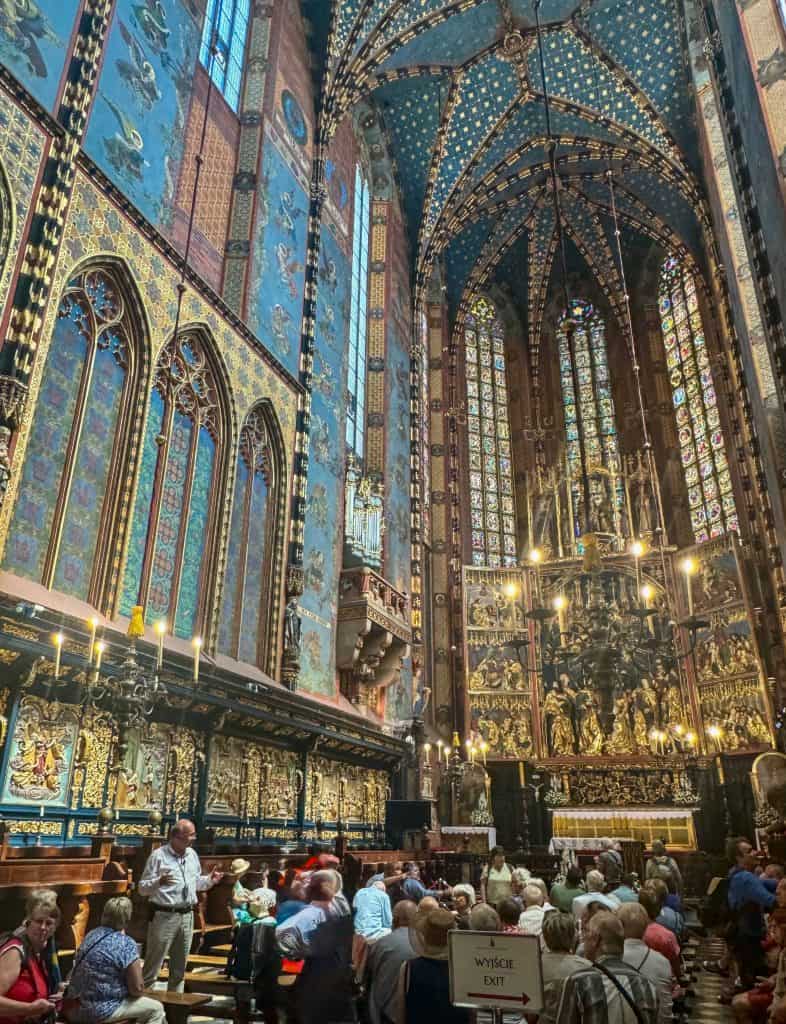
St. Mary’s Basilica
If you choose to skip the interior of Wawel Castle, spend the afternoon in Rynek Główny exploring St. Mary’s Basilica instead. Inside, admire the beautiful Gothic architecture, breathtaking vaulted ceiling dotted with gold stars, and the 15th-century wooden altarpiece by Veit Stoss—one of Poland’s finest medieval artworks.
On Fridays to Sundays in April, you can climb the steep Bugle Tower for sweeping views of the Market Square. At the top, you’ll be near the trumpeter who plays the centuries-old Hejnał Mariacki call every hour—a Kraków tradition best experienced up close.
Plan Your Visit to St Mary’s Basilica
|
DAY |
OPENING HOURS |
COST |
|
Monday to Saturday |
11.30am – 6.00pm |
18PLN |
|
Sunday |
2.00pm – 6.00pm |
18PLN |
|
Public Holidays |
2.00pm – 6.00pm |
18PLN |


Dinner – a Taste of Polish Tradition
In the evening, enjoy traditional Polish food at a nearby restaurant—or head back to the Main Square to relax and watch the buildings light up as night falls.
For a more immersive experience, consider booking a traditional Polish dinner that includes live folk dancing and music. These packages typically feature a 3-course meal served in a beautifully restored historic venue, blending authentic cuisine with vibrant cultural performances.
Dinner & Cabaret at Jama Michalika
For a lively and memorable night out in Kraków, book dinner and a cabaret show at Jama Michalika—one of the city’s oldest and most atmospheric restaurants. Enjoy traditional Polish dishes in an art nouveau setting, accompanied by live folk music and energetic performances in colourful traditional costumes.|
Insider tip: Even if you’re filming, you may be invited to join the dance! Shows often sell out up to 44 days in advance—book early to secure your spot.
👉 Reserve your seat now


Day 2: Discovering Jewish Kraków
Day 2 focuses on exploring Kraków’s Jewish heritage, starting with a visit to the iconic Oskar Schindler’s Enamel Factory in the morning, followed by a walking tour of the former Jewish quarter and Ghetto in the afternoon. Finish the day dining in Kazimierz, the vibrant historic district.
If you prefer a more relaxed pace or have extra time, consider splitting the museum visit and walking tour over two separate days.
Oskar Schindler’s Enamel Factory
Begin your morning at Oskar Schindler’s Enamel Factory, made famous by the book Schindler’s Ark and Spielberg’s film Schindler’s List. Schindler, a German industrialist and unlikely hero, employed hundreds of Jewish workers here, protecting them from deportation and almost certain death.
Former employees recalled long working days but also being fed, sheltered, and safe—a stark contrast to the fate of so many others. Today, the factory houses one of Kraków’s most powerful museums, immersing visitors in the city’s wartime years through personal stories, photographs, and recreated street scenes.
The museum offers a compelling look at life in Kraków under Nazi occupation, with a particular focus on the Jewish Ghetto. Rather than focusing solely on Schindler, the exhibitions tell many stories of courage, survival, and resistance. You’ll also gain a sobering insight into daily life in the ghetto, where residents endured cramped conditions and severe food shortages—sometimes surviving on just 300 calories a day.
Expect crowds, especially from tour groups, but the museum manages visitor numbers to avoid overcrowding.
Tickets are available at the factory office or online. Website sales open 120 days in advance and often sell out quickly, so mark your calendar if you plan to buy tickets this way! Given its popularity, I don’t recommend risking same-day tickets—expect queues and limited availability. Note that entry is required within 15 minutes of ticket purchase.
Plan Your Visit to Oskar Schindler Enamel Factory
|
DAY |
OPENING HOURS |
COST |
|
Monday |
10:00-15:00 |
FREE# |
|
Tuesday* to Sunday |
9:00-19:00 |
40PLN |
*Closed on the first Tuesday of every month
# Free tickets on Monday are only available at the door; expect to queue for 30 to 60 minutes.
🎫 Tickets can be purchased online (released 120 days in advance) or at the ticket office. Same day availability is limited—be prepared to queue. Individual sales start at 9:00 am.
🧑🏫 Guided Tours are available online for an extra 30 PLN and usually sell out well in advance.
⌛ Visit Duration: Allow around 2 hours.
🌐 Official Website — Oskar Schindlers Enamel Factory
How to Get There
🚶 A 25-minute walk from Wawel Castle or 38 minutes from Rynek Główny.
🚋 By tram: alight at Zabłocie (~5-minute walk) or Plac Bohaterów Getta (~8-minute walk).
📱 Use the Jakdojade app for detailed transit directions.
🚕 Taxi: Ask for Schindler’s Factory or Proszę na Fabrykę Schindlera, ulica Lipowa 4, 30-702 Kraków.
Don’t Miss Out: Book a Guided Tour before You Go
Schindler’s Museum is a moving and powerful experience but does not offer an audio guide. The narrow corridors often get crowded with tour groups—during my visit, some sections had to be skipped due to congestion.
If I were to return, I’d definitely book a guided tour. The official museum tours (30 PLN) are excellent but limited to three daily time slots and often booked weeks or months in advance.
Viator offers a variety of well-reviewed guided tours with flexible start times, often including skip-the-line access and knowledgeable guides who bring the human stories to life. A guide also helps you navigate the layout and ensures you don’t miss key exhibits.
Tip: Tours tend to sell out early, so book ahead. I’ve included a few options below in case your preferred time is unavailable.
Classic Street Food Lunch – Zapiekanka
Plac Nowy is a great lunch stop in Kazimierz and the place to try zapiekanka, one of Poland’s most popular street foods. This Cold War-era creation—a half baguette topped with mushrooms, cheese, and sauce—was born when Poles, cut off from the West, made their own version of pizza.
Like pizza, zapiekanka can be customised with extra toppings. It’s made to order and takes about 10 minutes. I enjoyed the crispy edges and the convenience of eating it on the go.
The stalls at Plac Nowy, especially Zapiekanki Królewskie, are known for serving some of the best in the city. The round building at the centre was once a kosher slaughterhouse and is now surrounded by casual bars, food stands, and cafés. During the day, it’s a relaxed spot for lunch; by night, it becomes one of the livelier areas in Kazimierz.

Walking Tour of the Jewish Quarter
Before WWII, Kazimierz—known as Kraków’s former Jewish Quarter—was home to around 65,000 Jews, making it one of Europe’s most vibrant centres of Jewish life. Tragically, by the end of the war, only about 3,000 remained.
Since the 1990s, Kazimierz has undergone a remarkable cultural and architectural revival. Today, it’s one of Kraków’s most eclectic neighbourhoods—steeped in history yet buzzing with creative energy, lively cafés, and cultural events.
I highly recommend joining a guided walking tour to delve deeper Kazimierz and Krakow’s Jewish heritage. We booked the Krakow Jewish Quarter and Ghetto Free Tour through GuruWalk, led by an extraordinary guide —a trained archaeologist turned gifted storyteller.
Our tour covered Kazimierz and the nearby Podgórze district, where the wartime ghetto once stood. Our guide explained how Kraków became a major centre of Jewish culture in Europe, touched on the centuries-old roots of antisemitism, and shared stories that were sometimes funny but also deeply moving—moments that had us laughing one minute and reaching for tissues the next.
We visited synagogues, memorials like Ghetto Heroes Square, and even the square used in the ghetto liquidation scene from Schindler’s List. It gave me a real sense of the community’s vibrant past alongside the heartbreaking history it endured.
Want to book the same Jewish Quarter & Ghetto Walking Tour?
Led by a captivating storyteller, this tour brings the streets, stories, and history of the area to life.
👉 Book your Jewish Quarter & Ghetto Walking Tour here.
Looking for an easier way to explore?
If walking tours aren’t ideal due to mobility or comfort preferences, these motorised tours offer a relaxed and accessible way to experience Kraków’s Jewish Quarter and historic sites.
Dinner in Kazimierz
Kazimierz is a great area to explore in the evening, especially if you’re interested in traditional Jewish or Polish-Jewish food. The neighbourhood offers plenty of restaurants serving dishes like cholent, latkes, and goose—often in candlelit settings that reflect its history.
If you visit at night, you’ll likely hear klezmer music, a style of Jewish folk music from Central and Eastern Europe. Played on instruments like clarinet, violin, and accordion, klezmer can swing between upbeat and melancholic—even within the same piece.
For those not ready to call it a night, Singer is a well-known bar worth visiting. Its tables are old sewing machines, and the atmosphere is cosy with a hint of unpredictability. Having been part of Kazimierz’s bohemian vibe for decades, it’s a place where you might even find people dancing on the tables. You’ll find it at Estery 20.
🎶 Looking for live Klezmer music with dinner?
Two of Kazimierz’s most established restaurants — Ariel and Awiw — regularly host live klezmer performances in the evenings. You’ll find traditional Jewish and Polish-Jewish menus, candlelit tables, and music that brings the history of the district to life.
Tip: Check recent reviews on TripAdvisor to confirm performance nights, as schedules can change.
Day 3: Day Trip to Auschwitz-Birkenau
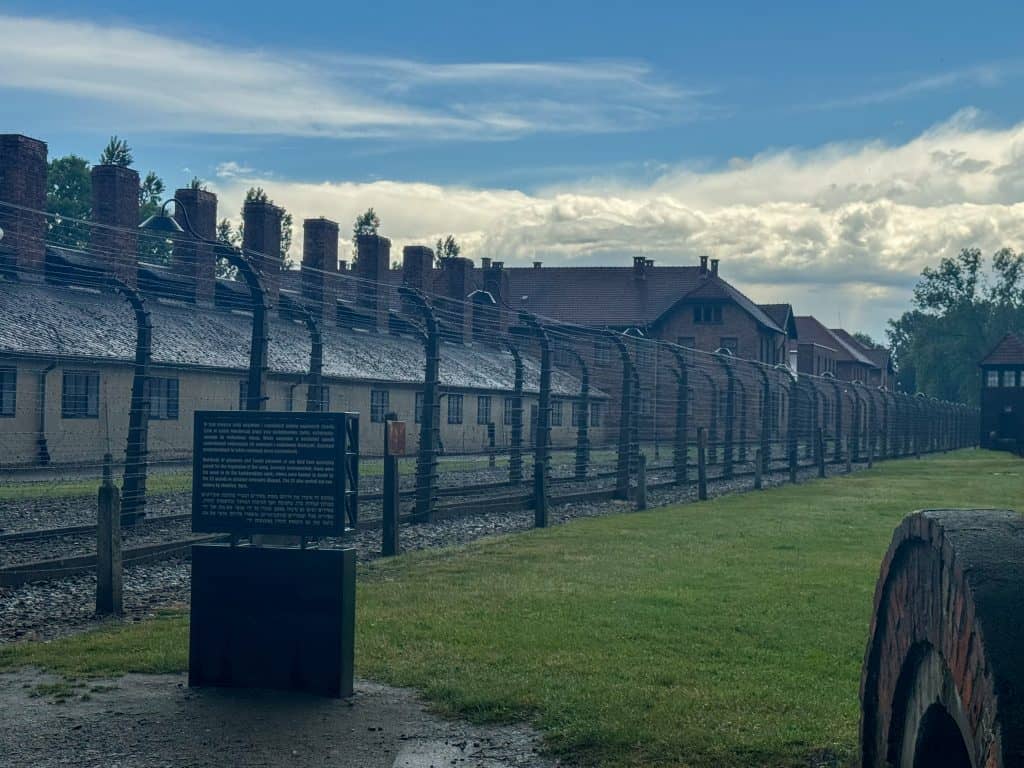
A visit to the Auschwitz-Birkenau Memorial and Museum is one of the most powerful and sobering experiences you can have in Poland. This was the site of the largest Nazi concentration and extermination camp during WWII, where over a million people—most of them Jewish—were systematically murdered as part of the “Final Solution.”
It’s an emotional day, but an important one. I strongly recommend joining a guided tour—not only for logistical reasons but also for the context a knowledgeable guide provides. The site is vast and complex, and a well-informed guide helps make sense of the layout, historical background, and the deeply personal stories of those who suffered here. You can find an overview of the best tour options in my guide to Visiting Auschwitz.
Most tours return to Kraków by mid to late afternoon. After such a heavy experience, you might want to spend some quiet time in Planty Park—a peaceful greenbelt surrounding the Old Town—to reflect and process. Later, treat yourself to a relaxed dinner back in the city.
Planning a Visit to Auschwitz-Birkenau?
Auschwitz isn’t a place to visit lightly. My dedicated guide covers how to get there, what to expect, and the best tour options.
👉 Read Visiting Auschwitz: How to Get There, What to Expect & Why It Matters
Optional Day 4: Salt Mines or Slow Travel
If you have an extra day in Kraków, consider visiting the Wieliczka Salt Mine—one of Poland’s most remarkable UNESCO World Heritage sites and an easy half-day trip from the city. This underground world of tunnels, chapels, sculptures, and salt lakes lies just 14 kilometres from Kraków but feels like something out of a fantasy novel.
The mine has been in continuous operation since the 13th century and was once a major source of Kraków’s wealth. Salt, known as “white gold,” played a vital role in the city’s prosperity. Today, it’s hard to imagine that something so simple—and now so inexpensive—once held such power.
For practical tips on getting there, booking tickets, and what to expect underground, see my guide on How to visit the Wieliczka Salt Mine.
.

Alternatively, if you prefer a slower pace or don’t want to venture far, Day 4 offers a chance to revisit something you missed earlier or explore another of Kraków’s excellent museums.
Here are a few you might consider:
- Rynek Underground Museum – Located directly beneath the Main Market Square, it offers a fascinating glimpse into medieval Kraków through interactive exhibits and excavated foundations.
- Eagle Pharmacy Museum – Tells the story of Kraków’s wartime Jewish ghetto through the eyes of a courageous pharmacist who stayed behind.
- Pomorska Street Museum – The former Gestapo headquarters during Nazi occupation, now a museum documenting the brutal repression of Polish citizens. It features preserved interrogation cells and exhibits on resistance and martyrdom.
Pro Tip: When buying your Oskar Schindler Enamel Factory ticket online, purchase the Memory Trail ticket for 52 PLN to include entry to both Eagle Pharmacy and Pomorska Street museums.
Of course, there’s nothing wrong with keeping it simple. You could settle in for a leisurely lunch or early dinner at one of the many restaurants around the Main Square and enjoy some unhurried people-watching—horses clip-clopping by, students gathering, street performers and bugles echoing from St. Mary’s Basilica.
Where to Eat in Krakow
Kraków’s dining scene could keep you busy for a lifetime — you’ll find everything from elegant dining rooms to quirky themed taverns and quick, tasty local favourites. I barely scratched the surface, but here are a few places I tried and would happily return to.
Jama Michalika – One of Kraków’s most atmospheric restaurants, famous for its Art Nouveau interiors and colourful history. Even if you skip the folk show, it’s worth visiting for the unique ambience and hearty, traditional Polish fare.
Coffee & Wine – I came here for breakfast. The food was fantastic with plenty of variety, and a relaxed, modern setting that’s perfect for a slow start.
Wolf Tavern – Step into a candlelit cellar with medieval décor, staff in elaborate cosplay (yes, complete with pointed ears), and a playful, themed menu. The interactive highlight is mixing your own “elixir” cocktail — I tried the Youth Potion! (a lot of fun but the same number of wrinkles next morning 😞)
Pierogi House (Pierogarnia Domowa) – A casual, self-service spot serving homestyle pierogi in generous portions at budget-friendly prices. Simple, satisfying, and a great option when you want something quick but authentic.


Final Thoughts on Your Kraków Itinerary
Kraków is a captivating city, with layers of history, striking architecture, and an atmosphere that’s hard to forget. With three well-planned days, you can take in its most famous sights, gain some insight into its complex past, and still have time to simply enjoy being here. If you can stretch to a fourth day, you’ll find no shortage of worthwhile additions.
Need help choosing your base? My guide on Where to stay in Kraków
covers the best districts, hotel picks, and accessibility tips for first-timers.
If you’re ready to explore more, here are some ideas to help you plan the next part of your journey through Poland.
Keep Exploring Poland
If your trip includes Auschwitz-Birkenau, I’ve written a dedicated guide covering everything you need to know—from how to get there, to what to expect, and tips for choosing the right tour:
👉 Visiting Auschwitz: How to Get There, What to Expect & Why It Matters
If you’re heading beyond Kraków, you might enjoy these guides to Poland’s other great cities:
👉 9 Best Things to Do in Warsaw
👉 9 Best Things to Do in Gdańsk

Planning Your Kraków Itinerary FAQs
Three full days is ideal to explore Kraków at a comfortable pace. You’ll have time for the Old Town, Kazimierz, and a day trip to Auschwitz-Birkenau. If you have a fourth day, consider visiting the Wieliczka Salt Mine or spending more time at the museums.
Yes—three days is enough to experience Kraków’s major highlights without feeling rushed. It gives you time to take a walking tour, visit Wawel Castle, explore the Jewish Quarter, and take a meaningful day trip.
Kraków is very walkable, especially in the Old Town and Kazimierz. For longer distances or day trips, you can use public transport or book tours that include hotel pickup.
Yes, a guided tour provides essential context and helps you navigate the site respectfully and meaningfully. And takes the hassle out of planning the logistics. You can find my full recommendations in my Auschwitz guide.
The most popular day trip is to Auschwitz-Birkenau. The Wieliczka Salt Mine is another excellent half-day trip, and both are easy to reach with organised tours. Zakopane, in the scenic Tatra Mountains, is another popular full-day option.
Stay in or near the Old Town for easy access to the main sights, restaurants, and tour departures. It’s worth paying a little more to be central—especially if you like to explore early or relax nearby in the evening.
Not at all. Compared to many European cities, Kraków offers excellent value. Accommodation, meals, and attractions are all very reasonably priced, especially if you book in advance. For more detailed information, see my guide, Poland 2025 Travel Costs: Daily Budget Guide for Mid-Range Trips.


