Romania 2025 Budget Guide: 14 Day Road Trip Costs
Freedom Years Travel contains affiliate links. If you make a purchase using one of the links below, we may receive compensation at no extra cost to you. We only recommend products and services we use and trust. Read our disclaimer for more information.
Think Europe is too expensive in 2025? Romania might change your mind. This underrated corner of Central Europe still offers excellent value—especially if you’re travelling independently and keen to explore both the highlights and the hidden corners.
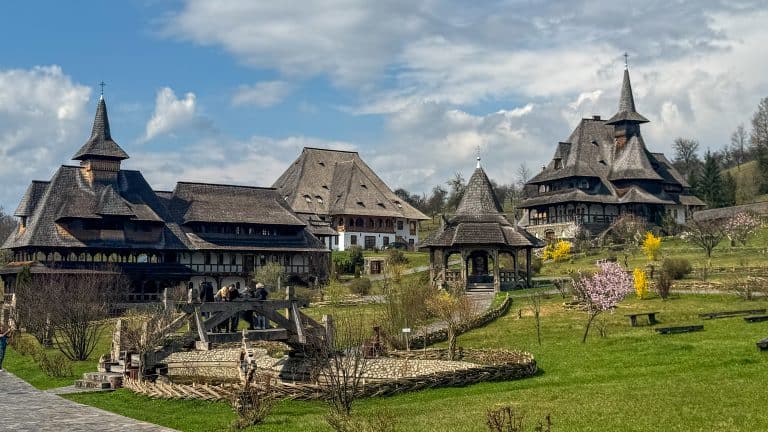
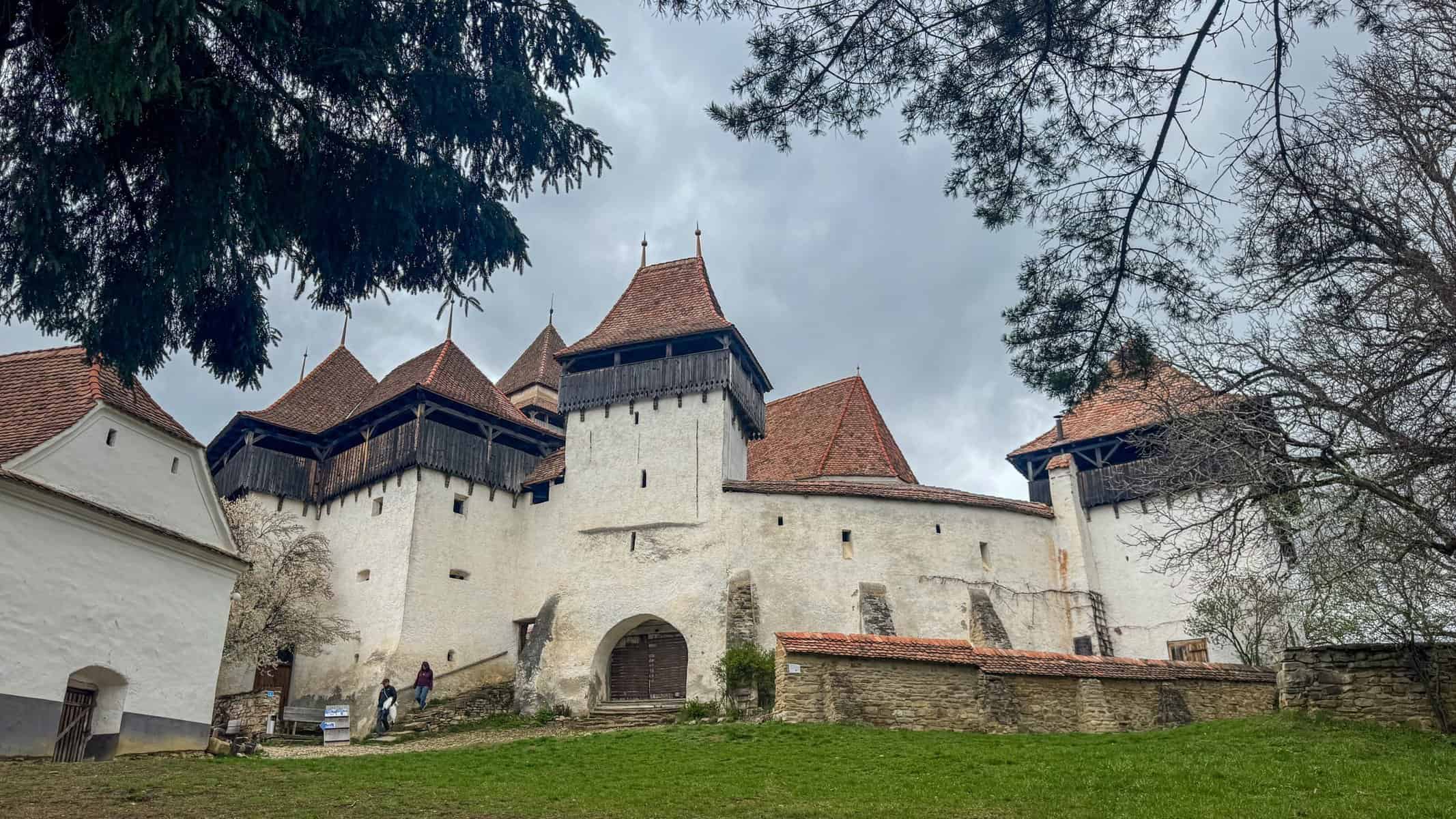
This post breaks down what I spent on a 14-day road trip through Romania, travelling as a couple in April. We started in Bucharest, headed north through Transylvania, explored the remote villages of Maramureș, then looped back through Cluj-Napoca and finished in Timișoara.
Along the way, we stayed in a mix of centrally located apartments, friendly guesthouses, and one very elegant hotel in Sighișoara. Breakfast was usually included or picked up from a supermarket, and we ate out once or twice a day—favouring local restaurants over fine dining.
There were no luxury splurges, but we didn’t scrimp either. Just a comfortable, mid-range trip focused on culture, scenery, and enjoying the slower pace of Romania’s countryside. If that sounds like your kind of travel, this guide will give you a realistic idea of what Romania might cost you in 2025.
Accommodation Costs: Character, Comfort and a few Parking Challenges
Accommodation was our biggest expense—but given the comfort and character of the places we stayed, it still felt like excellent value. I booked a mix of self-contained apartments and guesthouses, with one elegant hotel in Sighișoara that was a particular highlight.
Since this was a road trip, parking was a key consideration everywhere except Bucharest and Timișoara, where we didn’t yet have—or had already returned—the hire car. In smaller towns, parking was usually straightforward. In larger cities, it sometimes became part of the adventure. (The six laps of a Cluj-Napoca block just to access the code for a gated car park is one of those ‘special’ travel memories!)
We travelled in April, so air conditioning wasn’t necessary—but we were grateful for heating on more than one occasion. On a bitterly cold day in Cluj-Napoca, it was a relief to duck back to our apartment to thaw out before venturing out again. I also tended to choose places close to the town centre, which made it easy to explore on foot and take breaks during the day.
About half of our accommodation included breakfast, which helped reduce our overall food spend. We don’t yet prioritise elevators, though that’s something to keep in mind if you have mobility concerns—around half our stays involved carrying bags up at least one flight of stairs.
💰 Average nightly rate (per couple): 366 RON (~$84 USD)
📌 Price range: from $38 USD (farm guesthouse in Breb) to $106 USD (hotel with breakfast in Sighișoara)

🏠 Where I Stayed – and Would Happily Stay Again
These were my favourite stays in Romania—each memorable for very different reasons. Whether it was the location, the character, or the warm hospitality, all of them offered excellent value for mid-range travellers.
Bucharest – AIA Stay Bucharest River Apartments
💰 1272 RON for 3 nights
📍 Conveniently located near the Old Town and walking distance of major attractions.
🔍 Booking.com rating: 9.5/10
📝 Stylish, well-equipped apartment with outstanding customer service.
Sighișoara – Hotel Central Park Sighișoara
💰 460 RON for 1 night
🍳 Fabulous Breakfast included
📍 Prime location in Sighișoara’s historic center, just a 2-minute walk from the medieval citadel.
🔍 Booking.com rating: 9/10
📝 Elegant, Old-World Hotel with friendly, helpful staff, a great on-site restaurant and easy parking on-site.
Breb – Casa Grai Moroșănesc
💰 330 RON for 2 nights
🍳 Breakfast included
📍 Located in the village of Breb, an authentic self-sufficient family-owned farm.
🔍 Booking.com rating: 9.8/10
📝 A top pick for anyone seeking a traditional Romanian experience in an idyllic village. A true highlight from our 14 days.
Transport Costs: Roads, Ride and one Memorable Train
After researching Romania, we opted for a self-drive trip—and we’re glad we did. While Romania’s scenery is spectacular, its train system is not. Unlike most European countries, Romania doesn’t have a fast or reliable rail network, and schedules can be unpredictable at best.
We picked up a hire car after leaving Bucharest and returned it before exploring Timișoara, giving us 11 days of driving in total. It gave us the freedom to explore remote villages, stop for roadside photo ops, and take scenic back roads through the Carpathians. Most roads were decent, but Romanian roundabouts—and a national fondness for reckless overtaking—kept us on our toes.
We also took one international train—from Timișoara to Budapest—and let’s just say that was an adventure I’m not rushing to repeat. The ticketing system was vague, and the Romanian railway staff had the same ‘she’ll be right’ attitude that we Australians are famous for. Once we crossed into Hungary, however, I was faced with an impatient official who had zero sympathy for my confusion. Thankfully, an Austrian lady—familiar with the quirks of Romanian rail travel—overheard the exchange and came to the rescue.
Car hire and petrol cost us 2,780 RON (around $642 USD), including full insurance, which worked out to roughly $58 USD per day. For the flexibility it gave us—especially in rural Maramureș—it was money well spent. You can often save by returning the car to your original pickup point—one-way rentals usually include a surcharge.
Within cities, we mostly walked, but used taxis or Uber for short transfers between train stations or accommodation. We also booked a private airport transfer in Bucharest through Welcome Pickups. In total, we spent 345 RON (about $80 USD) on local transport across four trips.
📅 Average daily transport cost: 210 RON (~$49 USD)
💡 Includes: car hire, petrol, tolls, parking, one international train, local rideshares, and a private airport transfer
Food and Drink Costs in Romania
Romania is a great destination for travellers who enjoy eating out without blowing the budget. About half of our accommodation included breakfast, which helped keep food costs down. On the mornings it didn’t, we’d usually pick up drinking yoghurt and fruit from the supermarket—easy, portable, and surprisingly varied. (The range of high-protein drinking yoghurts in Europe continues to impress me.)
Lunch was typically our main meal of the day. We’d stop at a local restaurant or café for a generous main course and a glass of wine or beer. Sometimes we’d add a starter or dessert, depending on how hungry we were or how good the menu looked. Most meals were so filling that dinner was usually just a light snack back at the apartment.
Prices varied by location, with more touristy spots like Bran or central Bucharest costing more than rural towns or neighbourhood eateries. On average, a sit-down meal for two with drinks cost around 175 RON (~$40 USD), with our most expensive meal—at the iconic Caru’ cu Bere in Bucharest—coming in at 415 RON (~$96 USD).
A 500mL beer at a restaurant usually ranged from 12–23 RON (~$3–5 USD). Coffee, somewhat surprisingly, was often just as expensive as beer—at least in sit-down cafés. But there’s good news for coffee lovers: Romania has a fantastic budget-friendly chain called 5 to Go, where a quality double latte costs around 10 RON (~$2.20 USD). A welcome find for anyone craving their daily caffeine hit without the high price tag.
If food isn’t a big part of your travel experience, you could easily cut costs by cooking for yourself or choosing takeaway. But for me, sitting down to a traditional meal in a local restaurant is one of the highlights of travel—and in Romania, it’s still comfortably affordable.
📅 Average daily cost: 210 RON (~$49 USD)
💡 Includes: one restaurant meal per day with drinks, occasional starters/desserts, supermarket snacks, and coffee stops

Sightseeing and Activities – Castles, Culture and Local Insights
Romania’s top attractions are very reasonably priced, making it easy to explore without overspending. Entry fees to major sights are modest, and many experiences feel like excellent value—especially when compared to Western Europe.
Here’s what I paid in 2025 (per person):
- 55 RON (~$13 USD) – Bran Castle
- 50 RON (~$11 USD) – Corvin Castle
For guided experiences, I joined a few small group tours that were both informative and affordable:
- 85 RON (~$20 USD per person) – Libearty Bear Sanctuary in Zărnești
- 121 RON (~$28 USD per person) – Guided tour of the Palace of the Parliament
- 363 RON (~$84 USD per person) – Food tour in Bucharest
I also took free (tip-based) walking tours in both Bucharest and Brașov, which I highly recommend. These are professionally led and offer a great introduction to local history and landmarks. The suggested tip is around €10 per person (~52 RON / $12 USD).
Our most expensive activity was a private tour through the Maramureș region. This included a full day of sightseeing with transport by the guide’s car. It cost 950 RON (~$220 USD for two people)—and was worth every cent. Our guide was able to offer unique local insights and open doors that we would never have found on our own.
📆 Average daily cost: 199 RON (~$46 USD)
💡 Includes: castle entries, small group tours, tip-based walking tours, parking at attractions, and a full-day private tour in Maramureș

Sample Daily Costs (Mid-Range Style)
To give you a realistic idea of what we actually spent, here’s a sample daily budget for two people travelling in Romania. It’s based on our 14-day self-drive itinerary and reflects the average daily spend across the entire trip, using actual percentages from our total costs.
|
Category |
Cost (RON) |
Notes |
|---|---|---|
|
Accommodation |
345 RON |
Mid-range apartment |
|
Meals & Drinks |
198 RON |
One restaurant meal with drinks; supermarket items |
|
Transport |
221 RON |
Car Hire and Petrol |
|
Sightseeing |
196 RON |
Guided tour |
|
Extras |
5 RON |
Souvenirs, Miscellaneous items |
|
TOTAL |
965 RON |
~USD $223 |
The above reflects the average daily cost over 14 days. Some days were cheaper, particularly travel days or when we skipped paid activities. Others, like private tours, pushed the daily total higher—but this gives a solid idea of what mid-range travel in Romania looks like in 2025.
Total Trip Costs
Over 14 days, our total spend came to approximately 13,575 RON (~$3,141 USD for two people). That’s an average of 970 RON per day (~$224 USD), covering everything from car hire, accommodation and meals to tours, castle entries, and parking fees.
For that amount, we enjoyed a well-rounded, comfortable trip—with centrally located stays, hearty meals, and a few memorable tours.
Final Thoughts: Is Romania Still Great Value in 2025?
For mid-range travellers, Romania remains one of the best-value destinations in Europe in 2025. It may not have the name recognition of other European hotspots, but what it offers—at such a reasonable price point—makes it well worth exploring.
Over 14 days, I travelled comfortably: staying in well-located guesthouses and apartments, enjoying hearty meals, joining guided tours, and driving through spectacular countryside. What I spent felt entirely reasonable for everything I was able to see and do.
Romania may fly under the radar, but for travellers looking to stretch their budget without sacrificing comfort or cultural richness, it delivers exceptional value.
🧭 Planning Your Own Trip to Romania?
If you’re just getting started, you might find my post on the best time to visit Romania helpful for choosing when to go. And if you’re still wondering is Romania worth visiting, I’ve shared exactly what makes this country such a rewarding destination.
More practical posts are on the way, including a full itinerary, regional highlights, and tips for exploring Transylvania and Maramureș by car.

FAQs for Romania Travel Costs 2025
A comfortable mid-range trip for two people costs around 965 RON (~$223 USD) per day, including accommodation, meals, transport, activities and extras. Budget travellers could spend much less, while private tours or premium stays will push the cost higher.
Yes—Romania remains one of the best-value destinations in Europe in 2025. Accommodation, food, and entry fees are generally lower than in Western Europe, and the quality of experiences remains high.
For mid-range travel, expect to spend around 480–500 RON (~$110–$115 USD) per person per day. This includes staying in guesthouses or apartments, eating out once or twice a day, sightseeing, and car hire.
Not particularly. We paid around 2780 RON (~$642 USD) for 11 days of car hire, including fuel and full insurance. That’s about $58 USD per day, which offered great flexibility for exploring rural areas.
Yes—Romania is one of the few European countries that routinely asks for an International Driver’s Permit (IDP). We saw another traveller turned away for not having one, so it’s worth organising before your trip.
Public transport is cheap but not always efficient. Trains are slow and sometimes unreliable, particularly on rural routes. In cities, taxis and rideshares like Uber are inexpensive and easy to use.
A sit-down meal for two with drinks at a mid-range restaurant typically costs around 175 RON (~$40 USD). Prices can be higher in tourist hotspots or lower in rural towns.
Definitely. You can eat well on a mid-range budget. If your accommodation includes breakfast and you shop for light meals or snacks at supermarkets, you can keep food costs low while still enjoying traditional meals.
Yes—especially compared to Western Europe. A 500mL beer in a restaurant typically costs 12–23 RON (~$3–5 USD). Coffee, on the other hand, is often similarly priced, but chains like 5 to Go offer excellent quality at budget prices.
No—most attractions are very affordable. Entry to top sights like Bran Castle and Corvin Castle costs 50–55 RON (~$11–13 USD) per person. Guided tours offer good value, with small group options starting around 85 RON (~$20 USD).
Some attractions charge a separate photography fee, usually for professional cameras rather than phones. Fees are generally small (10–30 RON), but worth checking when you buy your ticket.
Yes, in many cities you’ll find tip-based walking tours. They’re professionally run, usually 1.5 to 2 hours long, and a great way to get your bearings. The typical tip is around €10 (~52 RON / $12 USD) per person.
Yes—it’s ideal for independent travellers who enjoy a mix of cities, countryside, and cultural experiences. Accommodation is easy to book, driving is manageable, and prices remain affordable.
Spring (April–June) and autumn (September–October) are great times to visit. Prices are lower than in the peak summer months, and the weather is generally mild—perfect for sightseeing.