Romania Road Trip: Two Flexible Itineraries from Bucharest
Freedom Years Travel contains affiliate links. If you make a purchase using one of the links below, we may receive compensation at no extra cost to you. We only recommend products and services we use and trust. Read our disclaimer for more information.
Planning a Romania road trip from Bucharest? After spending 11 days exploring by car, I’ve created two flexible Romania road trip itineraries that build on what worked well — and avoid the mistakes I made. They’re designed for a relaxed pace, minimal long driving days, and nd offer a balanced mix of history, landscapes, and rural culture.
Why drive? Romania is one of the few European countries without an efficient rail network, so car hire gives you freedom, flexibility, and access to the country’s most scenic routes.
Each itinerary offers something different. The first is a Bucharest loop reaching as far north as the Maramureș and includes the heart of Transylvania with an optional summer version that adds an extra day for the Transfăgărășan, Romania’s dramatic mountain highway (June–October). The 2nd route continues west from Transylvania and finishes in Timișoara, perfect for travellers continuing into Central Europe.
Whether your focus is rolling countryside, dense forest, medieval towns, or Carpathian vistas, these itineraries provide practical guidance for a memorable Romania road trip.
🔧 Planning a Romania Road Trip?
These are the tools I rely on for planning road trips in Europe.
🚗 Car Rental: Discover Cars – Excellent for comparing prices across major and local agencies. Ideal for one-way rentals between Bucharest, Sibiu, Cluj, or Timișoara.
📶 eSIM: Airalo – Straightforward setup with good coverage across cities and rural areas. A handy alternative to roaming, especially for navigation.
🏨 Accommodation: Booking.com – The widest range of hotels, guesthouses, and apartments in Romania, with flexible cancellation on most stays.
🎧 Tours & Activities: Viator – Great for walking tours, castle tours, and private excursions across Romania.
🗺 Navigation: Google Maps + Waze – Google Maps works well on main routes, while Waze offers real-time traffic updates and community-driven alerts that are especially useful for navigating busy urban areas or avoiding unexpected delays.
Best Time to Road Trip in Romania
Romania is a rewarding country to explore by car, but timing makes a real difference to the experience. If you’re early in the planning stage, it’s worth reading my broader guide — Best Time to Visit Romania? — for an overview of what each month offers. For road trippers, though, a few extra considerations come into play.
I visited in the first two weeks of April and, while it was a beautiful time to travel, it did feel a couple of weeks too early to see Romania at its best. Spring hadn’t fully arrived in the countryside and many of the rural landscapes were still waking up after winter. There were a lot of overcast skies.
The upside was experiencing a fresh snowfall in the north, which made the villages look like something out of a storybook. Based on these experiences, I’d suggest avoiding trips that start before early April, especially if part of your goal is to enjoy Romania’s spring colours.
Late April through June is an excellent window for a relaxed road trip. The scenery is lush, crowds are quieter, and the weather is generally settled. July and August bring warm, long days, but they also attract more visitors — particularly in Transylvania. If you prefer a calmer pace at key sights like Brașov, Sighișoara or Bran, travelling outside peak summer will give you a more enjoyable experience.
Autumn is another ideal season. September and early October offer mild temperatures and some of the most beautiful rural scenery of the year. The oak and beech forests of Transylvania and northern Romania turn gold and copper, creating spectacular driving conditions. By late October, higher regions can start seeing colder conditions, so it’s better to keep itineraries slightly shorter or avoid mountain passes.
Optional Summer Extension: Adding the Transfăgărășan
If driving the Transfăgărășan is on your wish list, plan your trip for June to October, when the road is typically open. This spectacular mountain route adds a full day to the main Bucharest loop and comes with dramatic scenery and tight switchbacks that are best tackled in clear weather. It’s worth timing this part of the trip for a weekday if possible, as weekends can be busy with local travellers making the most of the summer conditions.

What’s It Like to Drive in Romania?
You’ll hear all sorts of opinions about driving in Romania — from “it’s fine” to “Hell, no!.” After completing a 11-day Romania road trip, we found it very manageable and couldn’t imagine exploring the country any other way.
Romania’s highways are generally well-maintained, but the real magic appears once you leave the main roads behind. We avoided the motorways whenever possible, and that’s where the journey became unforgettable. On rural routes you may pass red-tasselled, horse-drawn carts, shepherds moving their flocks, and in regions like Maramureș and Transylvania, locals and Romani people in traditional dress. These moments make a Romania road trip feel like travelling back in time.
You’ll need to adapt to local driving habits. Overtaking is common — very common — and Romanian drivers do it with remarkable (over) confidence on rural roads. We never felt unsafe, but I still caught myself holding my breath for the people attempting the overtakes.
Roundabouts were the most challenging part of driving in Romania. Australian instincts don’t apply here, and we earned a few honks before adjusting. In Romania, you choose your lane before entering the roundabout, stay in it, and yield when changing lanes inside the circle. Clear signalling when entering and exiting is expected, making lane discipline stricter than back home.
Parking in historic centres like Brașov and Sighișoara also requires planning. These beautiful old towns weren’t built for modern traffic, and their narrow cobbled streets can be tricky to navigate. It’s worth checking public parking locations or confirming whether your accommodation provides a space.
Google Maps worked well for most of our trip, but signal dropped in the rural and mountainous areas of northern Romania. A local SIM card or eSIM is essential for reliable navigation. I used Airalo, which kept my maps running smoothly even in remote regions.
🚗 Driving Tips for Romania


Car Hire Tips for Romania
Hiring a car is the best way to Romania beyond Bucharest, but a little planning can make the experience far more relaxed. When ready to book your hire car, I recommend Discover Cars for a wide range of choices and flexibility for pick-up and drop-off locations.
Pick up & Drop Off Location
I chose to collect my car from downtown Bucharest rather than the airport, which worked well because we spent a couple of days in the city before starting the road trip. A downtown pick-up avoids navigating heavy traffic straight after your flight and saves on a couple of days’ rental and the hotel parking fees typically charged in Bucharest. If you can, plan to leave the city on a weekend morning — ideally Sunday — when traffic is noticeably lighter.
Depending on your onward travel plans, a one-way rental might make sense. For example, finishing in Timișoara can be worthwhile even with the drop-off fee, especially if it reduces onward travel costs. In our case, the most economical way to reach Budapest was by train from Timișoara.
✈️ Stress-free Private Airport Transfer If you’re flying into Bucharest, booking a private transfer is the easiest way to start your trip.
Car Type
Romania’s narrow streets and tight parking make a compact car ideal. A compact SUV gives a bit more elevation and comfort on winding rural roads. Just double-check the transmission type when booking — manual cars are far more common in Europe, so confirm an automatic if that’s what you prefer.
Insurance
For road trips, I always pay extra for full protection. On this trip, it added around USD 8.50 per day and covered the excess, damage, and roadside assistance — worth it for peace of mind on unfamiliar roads. You can save a little by relying on your own travel insurance or credit card coverage, but make sure the policy explicitly covers car hire excess; many don’t.
Other Considerations
Car hire requires a physical credit card in the driver’s name to cover the deposit — debit cards and virtual cards aren’t accepted.
Romania is the only country in Europe where we’ve actually been asked to show an International Driver’s Permit, and we saw a traveller turned away for not having one.
Romania uses digital vignettes for toll roads. Some car hire companies include these, but always confirm at the time of booking.
For navigation in northern and remote areas, a local SIM or eSIM is essential. I used Airalo and found coverage reliable across the entire route.
Before leaving the car park, photograph any existing damage. And if you’re relying on your phone for navigation, check the charging ports and cables are compatible with your device before you drive off.
Bucharest Loop: A Relaxed 9-Day Route Through Transylvania and Maramureș
Day 1 – Bucharest ➝ Sibiu
Driving Time: approx. 4.5 to 5 hours
Overnight: Sibiu
Leave Bucharest early and follow the route northwest through the Olt Valley. It’s an easy, scenic drive and a good introduction to Romania’s roads. Make a brief stop at Cozia Monastery, a 14th-century complex beside the river, before continuing to Sibiu. Aim to arrive mid-afternoon so you can settle in and explore the Large Square, the Bridge of Lies, and the old town’s medieval streets before dinner.
Where to Stay in Sibiu
Magister Seven is a beautiful, historic building with spacious rooms, located in the Old Town. The buffet breakfast is highly rated and private on-site parking is available for an additional fee.

Day 2 – Sibiu ➝ Alba Iulia ➝ Cluj-Napoca
Driving Time : approx. 4 hours
Overnight: Cluj-Napoca
Spend the morning in Sibiu if you’d like to visit the Brukenthal Palace or simply enjoy a relaxed walk before driving north to Alba Iulia. The star-shaped Vauban citadel is one of Romania’s most impressive fortifications and makes a worthwhile stop. Continue on to Cluj-Napoca, a lively university city with an easy-going feel. In the evening, explore Union Square, visit St. Michael’s Church, and settle into the city’s café culture.
Where to Stay in Cluj-Napoca
I recommend Cluj Memorandumului Apt ultracentral cu parcare privata for its central location and comfortable rooms. It includes free private parking.
Where to Eat in Cluj-Napoca
If you try just one memorable meal in Cluj, make it Olivo Caffe & Bistro. It was the standout meal of our entire 3 month trip in Europe. It had everything – delicious food, thoughtful service and an elegant yet cozy atmosphere. The Pork Belly will have you in raptures! One of our more expensive meals, but worth every cent for the outstanding quality and memorable experience.

Day 3 – Cluj-Napoca ➝ Maramureș
Driving Time : approx. 3 hours
Overnight: Breb
Drive north into Maramureș, where the landscape shifts to rolling hills, wooden churches, and small farming villages. Breb is one of several places you could base yourself, but it stands out for its strong sense of everyday tradition — home-grown produce, small-scale farming, and a pace of life that hasn’t changed much in generations.
Despite the number of guesthouses, nothing here feels staged. Many stays include home-cooked meals made with ingredients from the family’s own garden or farm, so dinner is easily taken care of.
Where to Stay in Breb
I recommend Casa Grai Moroșănesc, a family-run guesthouse with some of the warmest hosts we met in Romania. English was limited, but we managed with Google Translate and sign language until an English-speaking family member arrived from the city.
They proudly showed us around their small farm — one of the trip’s highlights. Staying here offers a genuine insight into village life in Maramureș, complete with generous home-cooked meals.


Day 4 – Full Day in Maramureș
Driving Time: approx. 1-2 hours
Overnight : Breb
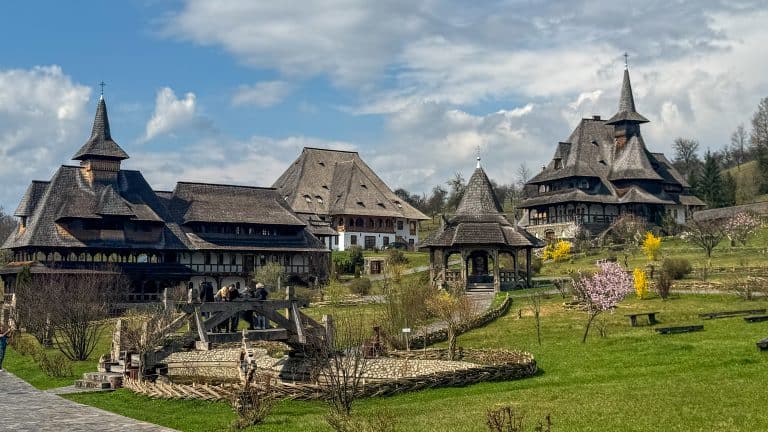
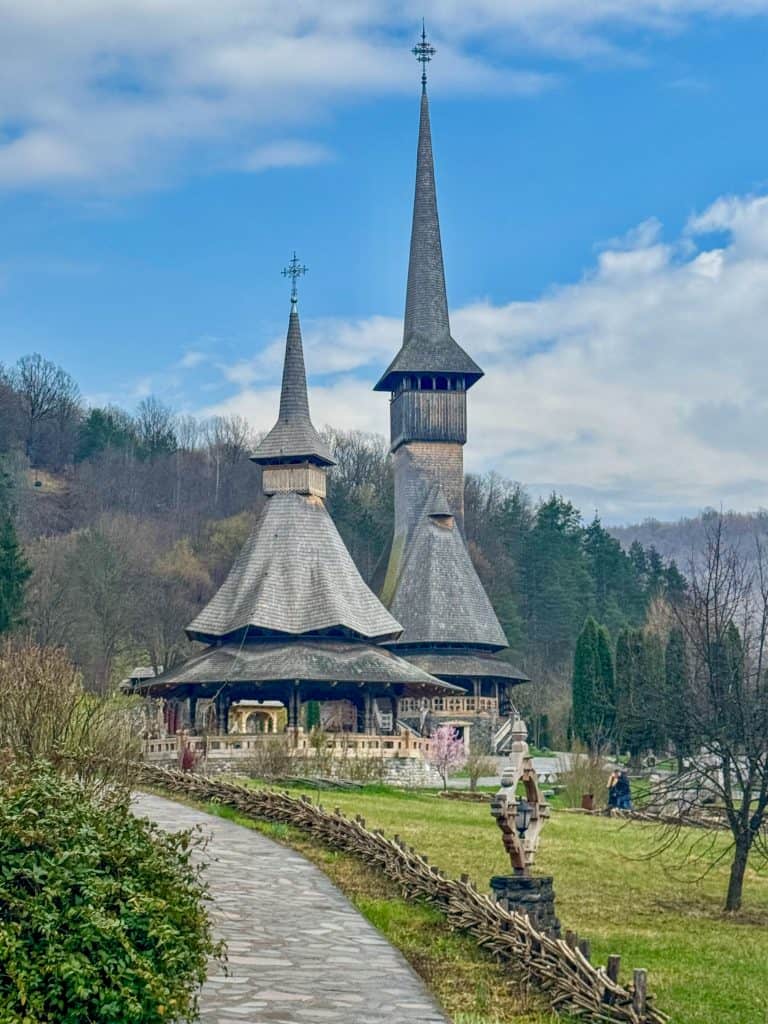
Spend a full day exploring the traditions and landscapes that make Maramureș so distinctive. The region’s famous wooden churches, including UNESCO-listed Budești or Surdești, are well worth visiting. Continue to Sighetu Marmației for the Memorial of the Victims of Communism — a powerful and sobering museum documenting Romania’s communist history. Finish with a visit to the Merry Cemetery in Săpânța, known for its brightly painted tombstones and humorous epitaphs, before returning to Breb for the night.
🚗 Private Maramureș Tour – A Local Perspective
One of the most memorable days of our trip was a
private guided tour through Maramureș
.
Our local guide drove us in his own car, taking us to places we would never have found on our own — including traditional
wood-carving and shingle-making workshops that aren’t normally open to visitors.
He also guided us through the Sighetu Marmației Memorial of the Victims of Communism, offering invaluable context
where most exhibits are in Romanian.
Beyond the sights, it was the conversations about rural life, customs, and modern Romania that made this experience truly unforgettable.
If you want deeper insight into Maramureș, this is the tour I most recommend.

Day 5 – Breb ➝ Bistrița ➝ Sighișoara
Driving Time : approx. 5 hours
Overnight: Sighișoara
Leave Breb in the morning and drive south through the rolling hills toward Bistrița, a pleasant stop if you want a quick stretch or coffee break along the way. Continue to Sighișoara, one of Transylvania’s most iconic towns and the birthplace of Vlad the Impaler. Arrive in the late afternoon and settle into your accommodation before heading out to explore the medieval citadel. Wander the cobbled streets, admire the colourful houses, and climb the Clock Tower for panoramic views of the town and surrounding hills.
For the best experience, I recommend joining a guided walking tour of Sighișoara Citadel. A local guide can provide fascinating insights into the town’s history, architecture, and the stories behind Vlad the Impaler, making your visit far more memorable than wandering alone.
🗺️ Guided Tours of Sighișoara Citadel
Discover Sighișoara’s medieval citadel with a knowledgeable local guide. Choose a
daytime tour
for a deeper look at the town’s colourful lanes, historic towers, and stories of Vlad the Impaler.
Or experience the atmosphere after dark on an
evening tour
, when the citadel is beautifully illuminated and far quieter.
Both options share the history, architecture, and hidden corners that make Sighișoara one of Romania’s most enchanting destinations.


Where to Stay in Sighișoara
We stayed at Hotel Central Park, located just across the road from the citadel. The beautiful rooms exude old-world charm. Breakfast is included — it’s one of the best I experienced in Romania. The staff were exceptionally helpful, accommodating our early arrival and providing a detailed map of the citadel. Ample parking is provided at the back of the hotel.
Where to Eat in Sighișoara
For dinner, we ate at Joseph T. Restaurant & Wine Bar, inside Hotel Central Park. The meal was excellent — my duck was perfectly cooked — and the menu offered very good value for money.

Day 6 – Sighișoara ➝ Brașov
Driving Time: approx. 2.5 hours
Overnight: Brașov
Spend a relaxed morning in Sighișoara, perhaps taking a final stroll through the citadel or enjoying a coffee at a local café.
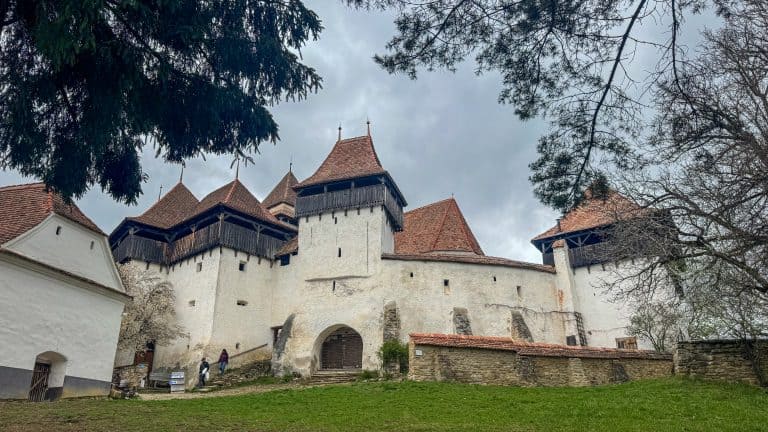
If you’re interested in Romania’s fortified Saxon villages, you could detour to Viscri on the way to Brașov. This UNESCO-listed village is known for its preserved fortified church, traditional white-and-blue houses, and quiet rural lanes. It’s also the village King Charles has been closely involved in restoring over the years, which has helped draw attention to its cultural significance.
Continue the short drive south to Brașov and explore the Council Square, visit the Gothic Black Church, and wander down Rope Street, one of the narrowest streets in Europe. For a different perspective of the city, consider a short hike or a cable car ride up Tampa Mountain for panoramic views over Brașov and the surrounding peaks.
Where to Stay in Brașov
Hotel Belvedere, offers easy parking and beautiful views over the city and mountains. It’s a short but steep walk down into the old town — easily managed with an inexpensive Uber ride back. Breakfast is included.
Where to Eat in Brașov
For dinner, try La Ceaun – Weiss near Council Square, where traditional Romanian dishes are served in a rustic, cozy atmosphere. The staff provided excellent recommendations and explanations of the dishes.
Day 7 – Brașov ➝ Zărnești ➝ Bran ➝ Brașov
Driving Time: approx. 1.5 – 2 hours
Overnight: Brașov
Begin the day with a visit to the Libearty Bear Sanctuary in Zărnești. Guided tours are required, and can be booked a week in advance. The experience offers meaningful insight into the rescued bears and the sanctuary’s broader conservation work. Many of the bears have heartbreaking histories.
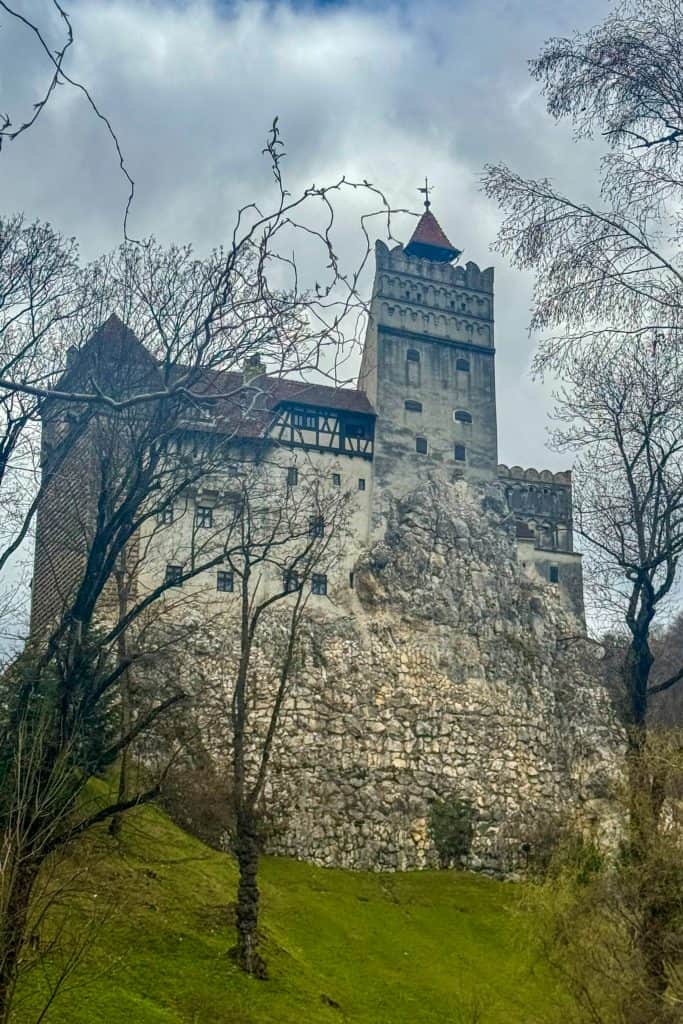
Afterward, continue to Bran Castle, the iconic “Dracula’s Castle,” to explore its medieval rooms and learn about the legends surrounding Vlad the Impaler.
If time and energy allows, make a short stop at Râșnov Fortress on the way back to Brașov. Set on a rocky hilltop, it offers panoramic views over the surrounding countryside. An inexpensive tractor ride to the fortress was available during my visit.
Return to Brașov for the night.

Day 8 – Brașov ➝ Sinaia
Driving Time: approx. 1 hour
Overnight: Sinaia
Take a short morning drive from Brașov to Sinaia, a picturesque mountain town often called the “Pearl of the Carpathians.” Spend the day at a relaxed pace visiting Peleș Castle, one of Romania’s most beautiful royal residences, with its ornate interiors and manicured gardens. Even the area surrounding the castle is beautiful. I half expected a fairy-tale princess to pop out from behind a tree.
If you have extra time or energy, you might detour to Cantacuzino Castle in nearby Bușteni, the filming location for the Wednesday series, or take a gentle mountain walk to enjoy the surrounding scenery. Staying overnight in Sinaia means you can explore without rushing and enjoy the fresh mountain atmosphere.
Where to Stay in Sinaia
Located in a tranquil setting, Vila Șipot – Casa Arhitecților is a 5 minute walk from the castles with private on-site parking (included in the accommodation cost).
Day 9 – Sinaia ➝ Bucharest
Driving Time: approx. 2 hours
Overnight: Bucharest or onward journey
After a relaxed morning in Sinaia, drive back to Bucharest. The journey is short and scenic, allowing time to enjoy the views without rushing.
You can drop off your hire car downtown if you plan to explore the city, saving on extra days and parking fees, or return it at Bucharest airport if flying onward. Once settled, enjoy an evening revisiting sights or sampling a local restaurant.
Summer Adventure: Adding the Transfăgărășan for Scenic Mountain Drives
Optional Summer Extension – Sinaia to Sibiu and the Transfăgărășan
For those visiting Romania in the warmer months (typically June to October), there’s an optional extra day you can add to your road trip to experience one of the country’s most famous drives: the Transfăgărășan Highway. Known for its dramatic switchbacks, hairpin bends, and stunning alpine scenery, this road was made famous worldwide by Top Gear, who called it one of the best driving roads in the world.
Depart Sinaia early to make the most of the day. Stop at Curtea de Argeș Monastery, a striking example of Romanian Orthodox architecture and a peaceful spot to stretch your legs. Then continue onto the Transfăgărășan, taking time for scenic pauses at highlights such as Vidraru Dam and Bâlea Lake. The route offers unforgettable landscapes, so enjoy it at a relaxed pace with plenty of opportunities for photos and short walks. After a full day of driving, settle in for the night in Sibiu.
9 Day Road Trip Summary
| Day | Route | Distance | Approx. Drive Time | Overnight |
|---|---|---|---|---|
| Day 1 | Bucharest ➝ Sibiu | ~275 km | 4.5–5 hrs | Sibiu |
| Day 2 | Sibiu ➝ Alba Iulia ➝ Cluj-Napoca | ~170 km | 2 hrs | Cluj-Napoca |
| Day 3 | Cluj-Napoca ➝ Breb (Maramureș) | ~165 km | 3 hrs | Breb |
| Day 4 | Maramureș (local exploring) | — | Minimal driving | Breb |
| Day 5 | Breb ➝ Sighișoara | ~270 km | 4.5-5 hrs | Sighișoara |
| Day 6 | Sighișoara ➝ Brașov | ~120 km | 2.5 hrs | Brașov |
| Day 7 | Brașov (local exploring) | ~70 km | 1.5-2 hrs | Brașov |
| Day 8 | Brașov ➝ Sinaia | ~50 km | 1 hr | Sinaia |
| Day 9 | Sinaia ➝ Bucharest | ~140 km | 2 hr | Bucharest |
Continuing West: The 11-Day Route Ending in Timișoara
If you’re continuing into Central Europe, ending your Romania road trip in Timișoara can be far more convenient than looping back to Bucharest. We travelled onward to Budapest, and the direct train from Timișoara was excellent value—cheaper overall than driving back across the country and then arranging long-distance transport. In that context, the one-way car-rental fee was worth it.
Timișoara itself is a beautiful finale to any itinerary, with elegant architecture, lively squares, and a relaxed, walkable centre. We arrived as Easter preparations were underway, and the atmosphere alone justified making this the final stop before crossing into Hungary.
Day 1 – Bucharest ➝ Brașov
Driving Time: approx. 3.5 hours
Overnight: Brașov
Leave Bucharest early to keep the day relaxed. Collecting a hire car in the city can take longer than expected, so an early start gives you enough time to reach Sinaia for Peleș Castle, widely considered Romania’s most spectacular palace. Pre-book the English-language tour (about 45–60 minutes) to avoid missing out, as on-the-day availability is limited. If you have the time and energy, Pelișor Castle sits just next door and offers a shorter, complementary visit.
Continue north to Brașov, arriving by mid-afternoon for a leisurely wander around Council Square and the surrounding streets.
Where to stay in Brașov
I recommend the same accommodation as in the 10-day loop—easy parking, lovely views, and a peaceful base just above the old town.I

Day 2 – Full Day in Brașov
Driving Time: None!
Overnight: Brașov
Spend a relaxed day exploring Brașov’s highlights. Wander Council Square and nearby streets, visit the Black Church, and stroll down Rope Street, one of Europe’s narrowest streets. For panoramic views, take the cable car or hike up Tampa Mountain—both are short but rewarding.
A guided walking tour is a great way to dive deeper into the city’s history and architecture; we loved the Walkabout Free Tour of Brașov. Our guide was knowledgeable, personable and funny and besides covering the history of Brașov, discussed the hot topics of bears and vampires.
Day 3 – Brașov ➝ Zărnești ➝ Bran ➝ Brașov
Driving Time: approx. 2 – 2.5 hours
Overnight: Brașov
Spend the morning at the Libearty Bear Sanctuary in Zărnești, a rewarding stop for wildlife enthusiasts. Continue to Bran Castle, often linked with the Dracula legend, for a quick tour of its medieval interiors. On the return to Brașov, make an optional stop at Râșnov Fortress for stunning views of the surrounding hills.

Day 4 – Brașov ➝ Sighișoara
Driving Time: approx. 2 hours
Overnight: Sighișoara
Leave Brașov in the morning for the short drive to Sighișoara, one of Transylvania’s best-preserved medieval towns. Spend the day exploring the citadel, wandering cobbled streets, and climbing the Clock Tower.
For a deeper experience, consider a guided day or evening tour of the citadel, which offers history, local insights, and the chance to enjoy the citadel’s charm in different lighting.
Overnight at Hotel Central Park, with ample parking, old-world charm, and a superb breakfast—an ideal base for exploring the citadel.
Day 5 – Sighișoara ➝ Breb (Maramureș)
Driving Time: approx. 5 hours
Overnight: Breb
Head north on a long but scenic drive toward Maramureș, passing rolling hills and picturesque villages along the way. Arrive in Breb, a storybook wooden village, and settle in for an authentic rural experience.
Overnight in Breb at the same guesthouse as in the first itinerary, known for its warm, welcoming hosts, home-cooked meals and palinka, and genuine farmstay experience.
Day 6 – Full Day in Maramureș
Driving Time: approx. 1-2 hours
Overnight: Breb
Spend the day exploring Maramureș’s highlights: the remarkable wooden churches (UNESCO sites such as Budești or Surdești), Sighetu Marmației with its Memorial of the Victims of Communism, and the uniquely painted Merry Cemetery in Săpânța.
To get the most out of your visit, consider the private tour we took. Our guide drove us to sites that are usually off the tourist radar, offered in-depth local insights, and helped interpret museums where displays are mainly in Romanian. It was one of the trip’s highlights.

Day 7 – Breb ➝ Cluj-Napoca
Driving Time: approx. 3.5 hours
Overnight: Cluj-Napoca
Drive southwest from Breb to Cluj-Napoca, a vibrant university city. Arrive in the afternoon and enjoy a relaxed evening in Union Square, exploring cafés, historic streets, and St. Michael’s Church.
Where to Stay and Eat in Cluj-Napoca
See the recommendations from the first itinerary, including excellent local dining and centrally located accommodation with easy access to the city’s main sights.
Day 8 – Cluj ➝ Hunedoara
Driving Time: approx. 3 hours
Overnight: Hunedoara
Drive southwest from Cluj toward Hunedoara to see Corvin Castle, one of Romania’s most striking Gothic-Renaissance castles. To make the most of the visit, plan to arrive early or later in the day to avoid school groups and crowds. While the interior is interesting for castle enthusiasts, the imposing exterior alone is spectacular, especially when illuminated in the evening.
Where to Stay in Hunedoara
Werk Hotel and Spa isn’t just a convenient base for visiting Corvin Castle — it’s one of the few places where you can admire the fortress glowing at night from your balcony or the hotel terrace. Guests often describe the illuminated castle as magical, romantic, and unforgettable.

Day 9 – Hunedoara ➝ Sibiu
Driving Time: approx. 1.5-2 hours
Overnight: Sibiu
Drive east to Sibiu, a beautiful medieval city in Transylvania. Explore the Large Square and the Bridge of Lies before settling in for the night.
Where to Stay in Sibiu
Stay in Sibiu if including this stop, or continue west to shorten the journey and reach your next destination sooner.
Day 10 – Sibiu ➝ Timișoara
Driving Time: approx. 4.5 hours
Overnight: Timișoara
Drive west from Sibiu to Timișoara, a lively city with grand squares and elegant architecture. Spend the afternoon exploring Union Square and Victory Square, soaking in the city’s historic and cultural vibe.
Drop off your car at Timișoara Airport, just a short distance from the city. The airport is small, making for a stress-free return, and it’s easy to take an Uber or taxi into the city centre.
Where to stay in Timișoara
We chose City Park Apartments and while the exterior may not impress at first glance, once inside you’ll discover a beautifully decorated, spacious apartment. The hosts are welcoming and attentive, ensuring a comfortable stay. With its central location, it’s the perfect base for exploring the best of Timișoara.

Day 11 – Full Day in Timișoara
Spend a relaxed day exploring the city on foot. Wander through Union Square and Victory Square, admiring the baroque and Secessionist architecture. Stop at local cafés for a leisurely lunch or coffee and enjoy the city’s vibrant atmosphere.
It’s a relaxed final day before continuing your travels beyond Romania.
11 Day Road Trip Summary
| Day | Route | Distance | Drive Time | Overnight |
|---|---|---|---|---|
| Day 1 | Bucharest ➝ Brașov (via Sinaia) | ~185 km | 3.5 hrs* | Brașov |
| Day 2 | Full day in Brașov | — | Minimal driving | Brașov |
| Day 3 | Brașov ➝ Zărnești ➝ Bran ➝ Râșnov ➝ Brașov | ~70 km | 1–1.5 hrs | Brașov |
| Day 4 | Brașov ➝ Sighișoara | ~120 km | 2 hrs | Sighișoara |
| Day 5 | Sighișoara ➝ Breb (Maramureș) | ~300 km | 5 hrs | Breb |
| Day 6 | Full day in Maramureș | — | Minimal driving | Breb |
| Day 7 | Breb ➝ Cluj-Napoca | ~170 km | 4.5 hrs | Cluj-Napoca |
| Day 8 | Cluj-Napoca ➝ Hunedoara | ~170 km | 3 hrs | Hunedoara |
| Day 9 | Hunedoara ➝ Sibiu | ~125 km | 1.5–2 hrs | Sibiu |
| Day 10 | Sibiu ➝ Timișoara | ~270 km | 4.5 hrs** | Timișoara |
| Day 11 | Full day in Timișoara | — | No driving | Timișoara |
Visiting Bucharest at the Start or End of Your Road Trip
Although this itinerary focuses on Romania’s countryside and medieval towns, I still recommend allowing a little time in Bucharest either before or after your road trip. The capital is often overlooked, yet is an engaging mix of Belle Époque architecture, communist-era landmarks, and a lively dining scene.
If you’re planning your first visit, my guide Is Bucharest Worth Visiting? gives a useful overview of what to expect, while 9 Best Things to Do in Bucharest highlights the city’s major sights. For practical planning, Where to Stay in Bucharest outlines the best areas and hotels for first-timers so you can make the most of your stay.
Final Thoughts on Planning Your Romania Road Trip
Romania is a country made for road trips. Whether you follow the loop back to Bucharest or continue west to Timișoara, the journey takes you through fortified towns, rural valleys, centuries-old traditions, and mountain landscapes that feel wonderfully untouched.
If you’re still deciding whether Romania belongs on your itinerary, Why Visit Romania? offers a helpful overview of the country’s appeal. For budgeting your trip, Romania 2025 Budget Guide breaks down realistic costs for a two-week journey, and Best Time to Visit Romania explains how the seasons shape your experience.
By the end of a Romania road trip, most travellers leave with a mix of experiences that are uniquely Romanian — medieval squares, small farming villages, family-run guesthouses, and some of the warmest, most welcoming people you’ll meet in Europe. Driving felt safe throughout, and any language barriers were easily navigated with goodwill and Google Translate.
If you’re unsure about taking on a road trip here, consider this your reassurance: Romania is easier to navigate than many expect, and having a car simply gives you access to places and experiences you’d never reach otherwise.
Frequently Asked Questions About a Romania Road Trip
Romania is generally straightforward to drive, but you should expect slower travel times than Google Maps suggests. Roads between major cities are good, but rural routes can be narrow, winding, or under construction. Give yourself buffer time and avoid driving at night in rural areas.
Most travellers from Australia, the UK, the EU, and the US can drive with their home licence plus an IDP. The rental company we used insisted on seeing it and even turned away a fellow traveller who did not have his IDP.
Most travellers begin in Bucharest, where the major international airport and rental car companies are located. You can loop back to Bucharest or finish in Timișoara, depending on your route. Just be aware that a one way drop-off fee is likely to be applied.
Yes. Reputable companies like those available through Discover Cars offer reliable vehicles and clear insurance options. Book early for peak months and double-check whether your accommodation has onsite parking.
You can cover the highlights of Transylvania in 5–7 days, especially if you focus on places like Sibiu, Alba Iulia, Cluj-Napoca, and Sighișoara. However, to include Maramureș — which I think is one of the most fascination areas to visit — you’ll need at least 9 days.
A full Bucharest loop including Transylvania and Maramureș works well in 9 days, while finishing in Timișoara instead of returning to Bucharest is better with 10 days. If you’re travelling in summer and want to drive the Transfăgărășan Highway, add one extra day.
Late spring to early autumn (May–October) offers the best driving conditions. The Transfăgărășan Highway is usually open from June to October, depending on weather.
If you’re visiting in summer and confident with mountain roads, it’s a spectacular detour. Expect hairpin bends, unpredictable weather, and slow traffic during peak weekends.
Historic centres can be tricky for parking. Many hotels provide onsite or nearby paid parking—worth prioritising when booking. In smaller towns and villages, parking is usually easy.
Yes — Google Maps works well throughout most of Romania, and many locals also use Waze for its alerts about roadworks, speed cameras, accidents, and delays.
If you’re driving in northern Romania, especially in Maramureș, you’ll need to be properly connected to the Romanian mobile network. In some rural areas you may see the dreaded “E” (Edge) signal, which makes live navigation slow and unreliable. An eSIM or a local SIM with good coverage is worth having so your maps load quickly and reroute when needed.
For popular spots like Sibiu, Cluj-Napoca, and Maramureș, booking ahead is recommended, especially in summer. Rural guesthouses can fill up quickly on weekends.
In cities, cards are widely accepted. In villages and small guesthouses, carrying some cash (lei) makes life easier.
Absolutely. Romania is affordable, welcoming, and packed with cultural and natural diversity. If you’re unsure where to begin, my posts on Why Visit Romania and Best Time to Visit Romania are a good starting point.